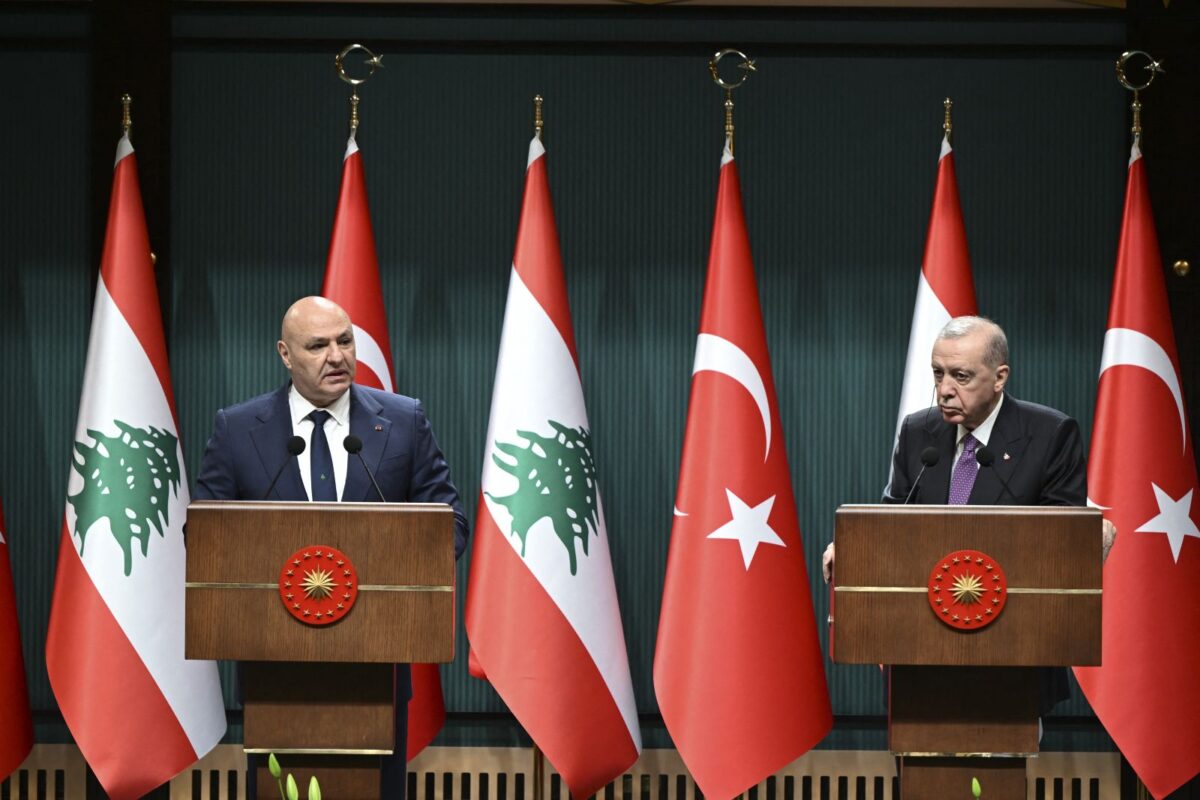
ANKARA, TURKIYE - JULY 30: Turkish President Recep Tayyip Erdogan (R) and Lebanese President Joseph Aoun (L) hold a joint press conference following their bilateral meeting at the Presidential Complex in Ankara, Turkiye, on July 30, 2026. Dogukan Keskinkilic / Anadolu (Photo by Dogukan Keskinkilic / ANADOLU / Anadolu via AFP)
The former boss of Banque du Liban, Riad Salamé has entered a hunger strike, after being imprisoned over corruption allegations. Last week, the Court of Cassation prosecutor’s office issued an arrest warrant against Salamé, after he failed to show up at a court hearing. On Friday, he was arrested in Bhannès Hospital, from where he was transferred to Rozmieh prison.
Salamé’s doctor last week requested his transfer to Bhannès Hospital, citing his health condition. The former BDL boss has entered a hunger strike and is refusing to take medication, which has impacted his well-being, Lebanese media report.
During his 30-year tenure at the Banque du Liban, Salamé allegedly built a major corruption scheme, through which he enriched himself. With the help of the company Forry Associates, which is connected to his brother, he allegedly transferred money to offshore accounts.
His name appeared in the Swiss Leaks in 2015. Lebanon’s financial crisis in 2019 sparked major criticism against Salamé, causing Lebanese lawyers as well as European entities to open investigations against him in the years that followed. In 2022 he was banned from leaving the country, while his assets were frozen. In the following years, he faced several investigations related to embezzlement and illicit enrichment as well as forgery.
In Lebanon
Rome talks starting this week: Lebanese and Israeli representatives will meet in Rome starting Tuesday to discuss the future of the pilot zones in Lebanon, as well as the withdrawal of the Israeli military. The meeting will be held at the technical level and serves to discuss implementation details about the framework agreement agreed upon last month by both parties.
Anniversary of the Beirut port blast: On Tuesday, many Lebanese will commemorate the Beirut Port Blast, which occurred six years ago and killed at least 218 people. Lebanon Prime Minister Nawaf Salam has declared the 4th of August as a national mourning day.
Five soldiers wounded in Bint Jbeil area: An Israeli drone allegedly hit a car, hurting five soldiers, Lebanese media report. The Lebanese army however said the explosion originated from a “suspicious object”.
Lebanese Army Day: On Saturday, Lebanese President Joseph Aoun underlined the importance of the Lebanese Army regarding taking over power in Lebanese territories after the Israeli withdrawal. Both the French and the American embassies expressed their support for the Lebanese military amid Army Day.
Israel accused of stealing olive trees in South Lebanon: Several journalists reported that 600 olive trees went missing in Zawtar el-Charkiye, according to satellite images.
Turkey eyes UNIFIL follow-up: Turkey’s President Recep Tayyip Erdogan indicated that Ankara is interested in helping with Lebanon’s security after the UNIFIL mandate expires at the end of the year. Once UNIFIL withdraws, “Turkey wants to take part in all initiatives that will be launched to support security in the region and ensure Lebanon’s sovereignty,” Erdogan said after meeting Aoun in Turkey last week.
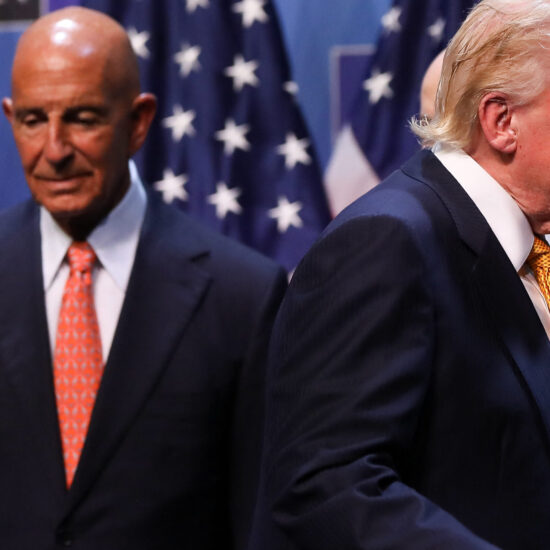
Arrest warrant for Antoun Sehnaoui: After the businessman and banker met with Israeli Prime Minister Benjamin Netanyahu during a dinner in Washington, he is now facing a lawsuit in Lebanon. Under Lebanese law, Israelis and Lebanese are not allowed to be in contact with each other.
In The Region
U.S. refrains from major attack on Iran: U.S. President Donald Trump decided against bombing Iran’s energy infrastructure on Saturday. According to Trump, several Middle Eastern countries — including Iran — asked him “to hold off any attack in that the perimeters of a deal has been agreed to.” The deal would include the opening of the Strait of Hormuz as well as an end to Iran’s nuclear program, Trump said. Israel is on board with the U.S., he added.
MBS raised concerns: The Saudi crown prince Mohammed bin Salman called Trump on Sunday and lobbied Washington to refrain from bombing Tehran, Axios reports.
Iran denied Trump’s claim: Tehran rebuked the statement that they had asked Trump to refrain from bombing the country. This was nothing but “another lie”, an Iranian military official said, according to an Iranian news agency.
What We’re Reading
The next test for the Lebanon-Israel framework begins in Rome. Now’s Rodayna Raydan writes about the upcoming negotiations in Italy, which are facing a central dilemma: While Israel will likely insist on the disarmament of Hezbollah, the group is likely to want the Israeli Army to withdraw first.
When Sovereignty Begins with a Wall. Now’s managing editor Makram Rabah discusses how symbolism, portraits and posters are used as a political tool to exert power. He argues that while popular leaders stay in the hearts and minds of the population, other leaders cling onto the public display on walls with force to show their power.
The Forgotten Document. Charles H. Al-Hayek examines which role Patriarch Elias Hoyek’s memorandum played during the Peace Conference in Paris in 1919 — and what the visit meant for Lebanon’s path to independence. Al-Hayek argues that Hoyek’s role was not unique, but rather that the arguments he used had long been developed by other intellectuals.
Greater Lebanon. Now’s Eli Khoury looks at the different perceptions of Greater Lebanon during its time of establishment. He examines how the different groups saw the project and each other and how this continues to affect today’s Lebanon.
When Hezbollah Attacks Joseph Aoun, He Should Be Reassured. Now’s Managing Editor Makram Rabah looks at the criticism Lebanese President Joseph Aoun received after meeting U.S. President Donald Trump. He argues Aoun is being criticized by Hezbollah, Nabih Berri and others because the President was focusing on Lebanese, rather than Iranian interests in Washington.