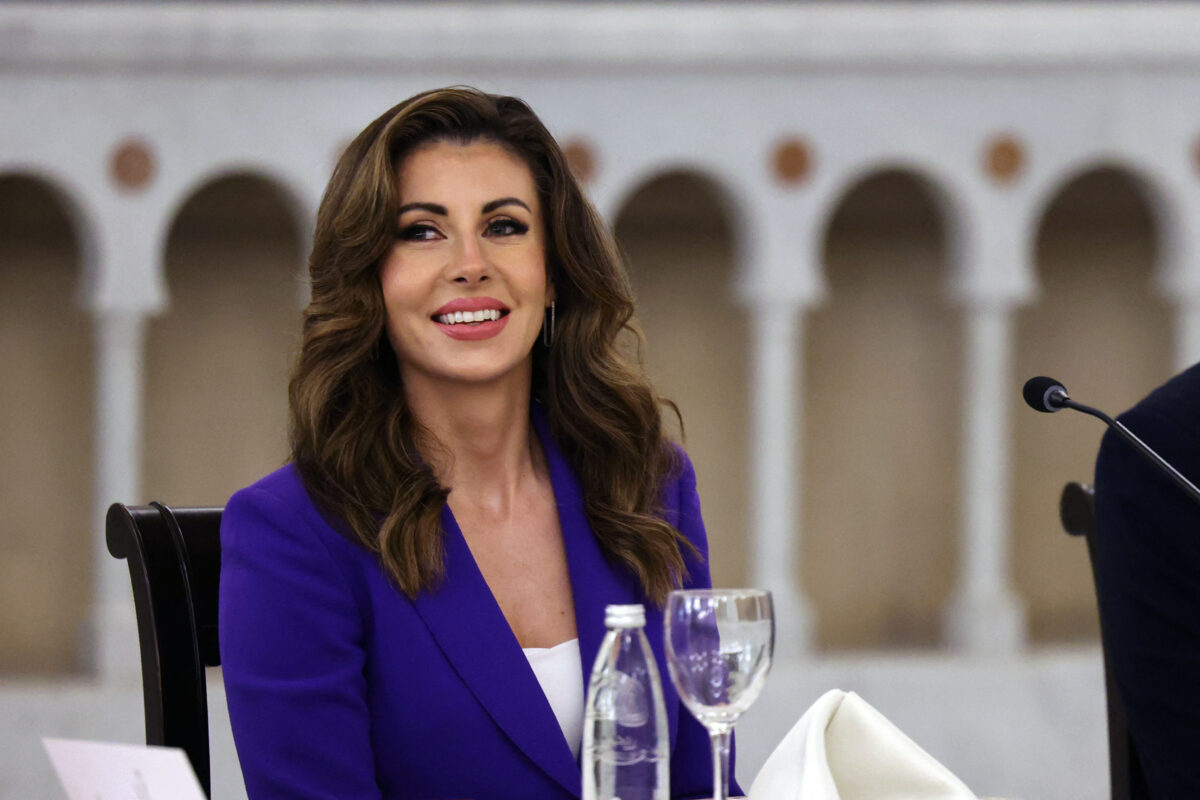
In an interview with Iran International, the former US envoy said disarming Hezbollah would take time but urged Lebanon’s leaders to persist, arguing that peace could open the way to economic recovery.
Morgan Ortagus has described the dismantling of Hezbollah’s military and political structures as a long-term project for Lebanon, while insisting that the country’s leaders must continue to assert the state’s authority over weapons and negotiations.
“It wasn’t created overnight and it won’t be expunged overnight,” Ortagus said in an interview with Iran International. Strengthening the Lebanese state and removing what she called a “parallel state within a state” would require sustained work by the government and its international partners, she added.
Ortagus, who served as US State Department spokesperson during Donald Trump’s first administration and as deputy presidential envoy to the Middle East during his second, said she was encouraged by the positions taken by President Joseph Aoun and Prime Minister Nawaf Salam. Both, she said, had been clear that Hezbollah must be disarmed and that weapons must come under state authority.
She singled out Salam’s assertion that no one negotiates on behalf of Lebanon except Lebanon itself. Aoun and Salam, she said, should “continue to insist on the sovereignty of Lebanon.”
Her remarks came in response to a question about the difficulty of dismantling Hezbollah’s networks beyond its military wing. The interviewer pointed to the group’s political party, charities and financial structures, describing an organization deeply embedded in Lebanese life. Ortagus acknowledged that the process would be difficult and lengthy, but argued that the scale of the problem made action more urgent.
She also challenged the view that Hezbollah’s claim to represent part of Lebanese society should protect its armed role. Lebanese citizens may belong to the group, she said, but its leadership and direction were tied to Iran’s Islamic Revolutionary Guard Corps. The Lebanese government, she argued, must demonstrate to Shia citizens that it can provide for them and protect their interests.
Ortagus placed particular emphasis on the cost of conflict for that community. Iran and Hezbollah, she said, had drawn Lebanon into repeated wars whose victims included the very people the group claims to defend. She expressed hope that Lebanese Shia would see a choice beyond reliance on Hezbollah and Iran, and that international support could help Lebanon build a functioning state.
The interview also addressed the prospect of peace between Lebanon and Israel. Ortagus pointed to increasingly open discussion among Lebanese commentators and politicians about relations with their southern neighbor. She argued that an end to conflict could bring an economic dividend: renewed investment, stronger links with Lebanon’s diaspora and opportunities that aid alone could not provide.
“Can you imagine,” she asked, what peace might mean for Lebanon’s economy, given the education and capabilities of its people? She cited the Abraham Accords as an example of the economic case the Trump administration had made for regional normalization. Her comments presented peace as a possible route to recovery, though they did not set out how Lebanon could reach it amid the unresolved questions of occupation, security and Hezbollah’s arms.
On wider US policy toward Iran, Ortagus defended the maximum economic pressure campaign but cautioned that sanctions alone could not achieve Washington’s objectives. “Sanctions are not a silver bullet,” she said. They were a tactic within a larger strategy aimed at preventing Iran from obtaining a nuclear weapon, restricting its missile and drone capabilities, and cutting funding to its regional allies.
She was similarly skeptical that a written agreement with Tehran would be enough without a credible means of enforcement. The question, she said, was what consequences Iran’s decision-makers would face if they failed to honor a deal. Speaking in a personal capacity, she suggested that some form of American verification would be necessary.
Ortagus said the United States remained committed to working with Lebanon, pointing to Secretary of State Marco Rubio’s involvement in negotiations now handled by Ambassador Michel Issa. Her central message to Beirut was one of persistence: restoring the state’s authority would take time, but Lebanon’s government had to keep pursuing it.