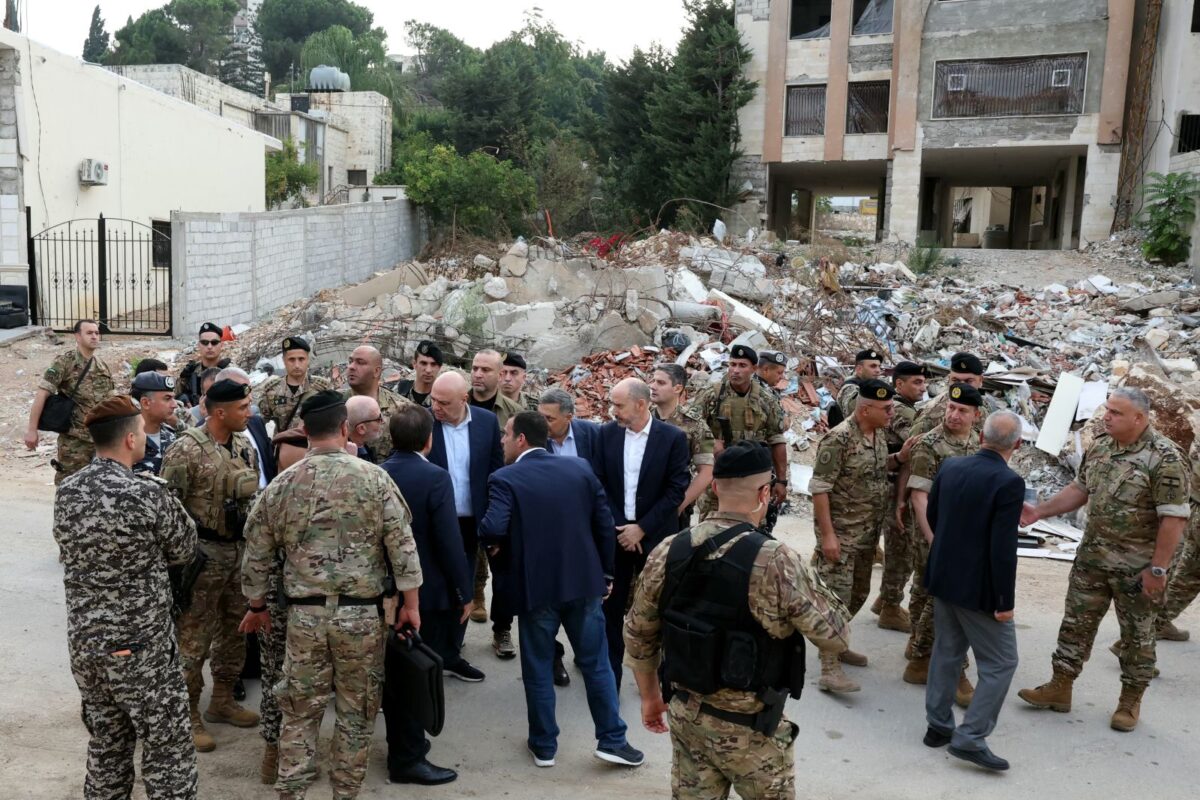
Photo by - / LEBANESE PRESIDENCY / AFP. A photograph released by the Lebanese Presidency press office on September 12, 2026, shows Lebanese President Joseph Aoun (C-L) standing amid security officials during a visit to Nabatieh.
On Saturday, Lebanese President Joseph Aoun visited Nabatieh, after Israeli military heavily struck the Ali Taher ridge last week. The eighth round of negotiations between Israel and Lebanon was postponed to October.During his visit to the South of Lebanon, Aoun said, “there will be no new negotiations with Israel at the moment.”American outlet Axios reported that the cancellation of the Rome talks was due to the Jewish holiday and due to preparations for the UN General Assembly scheduled to begin next week.Another reason was preparations for the Paris conference, which is meant to boost the Lebanese army and help Beirut regain its sovereignty.Regardless of the stalled negotiations, the Lebanese and Israeli ambassadors are set to meet in the U.S., according to the AFP.
In Lebanon
Strikes in Ali Taher: Israel’s army struck Ali Taher ridge again on Sunday morning. On Thursday, the Israeli military dropped 1,100 tonnes of explosives on the Lebanese region, which caused an earthquake of magnitude 4.1. Israeli Prime Minister Benjamin Netanyahu celebrated the attack as one of the biggest strikes against Iranian forces outside of Iran.
Anniversary of the assassination of Bachir Gemayel: On Sunday, Lebanese President Joseph Aoun and Prime Minister Nawaf Salam commemorated the 44th anniversary of Bachir Gemayel’s death.
Lebanese mayor detained by Israel: Kassem Kadri, who is the mayor of Kfar Shuba, was arrested by the Israeli military for less than an hour over the weekend, Lebanese media report.
In the Region
Oman meeting cancelled: On Sunday evening, the Omani Foreign Minister Badr al-Busaidi announced that the regional meeting, scheduled for Monday, was cancelled. “In the interests of consensus, the regional meeting set for tomorrow in Salalah has been postponed,“ he said. Regional countries and Iran were set to discuss the recent escalations in the Strait of Hormuz.
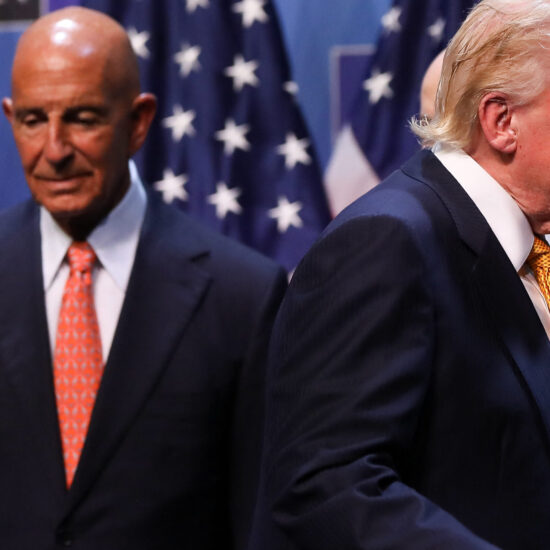
Trump reactions to the war: The U.S. President Donald Trump said on Sunday that the Oman meeting was of no interest to him. Trump also indicated that the war with Iran might end before the midterm elections in November — which would cause oil prices to “droop like a rock”. At the same time, he did not rule out the possibility that U.S. troops might “stay [in Iran] and keep the oil”. He drew similarities to Venezuela, where, according to him, the oil revenues had already paid for the war.
Protest in Syria amid rising fuel prices: Protests have broken out in the country, including in the HTS stronghold of Idlib. Syria’s Parliament summoned the country’s energy minister, Mohammed Al-Baschir, about the rising costs.
What We’re Reading
Beirut Habibi: Celebrating a City in the Present Tense. Now’s Managing Editor Makram Rabah reviews the book Beirut Habibi by Charif Majdalani, which offers an in-depth understanding of Beirut’s cultural life, from cafés across the Lebanese capital to important landmarks and the country’s history.
Melqart, Lord Of Tyre. Charles H. Al-Hayek looks at the history of Tyre and the ancient god Melqart. Besides contributing to the city’s identity, little is known about the god, nor is he remembered in Lebanon’s southern city. The author argues this legacy should be revived and celebrated again.
Hezbollah Is the Target. Lebanon Is the Battlefield. Ibrahim Rihan looks at the recent escalations in Lebanon’s Ali al-Taher region and argues that Lebanon should have sovereignty over the territory — rather than either Hezbollah or Israel controlling the area, which ultimately weakens the state.
A Statement Never Issued. Eli Khoury writes a fictional address in which he explains how a functioning Lebanese state should look. The author argues that the government in Beirut should have the monopoly of weapons, while it would also need to enforce political and judicial reforms to reach a more decentralized power system.
Geagea’s Three Silences: Taef, Peace, Federalism. Elissa El Hachem criticised Samir Geagea’s speech amid the 50th anniversary of the Lebanese Forces. According to her, Geagea did not focus on Lebanon’s most pressing topics — such as a peace deal with Israel, the Taif agreement and federalism.