Rome, Italy. Photo by ANDREAS SOLARO / AFP
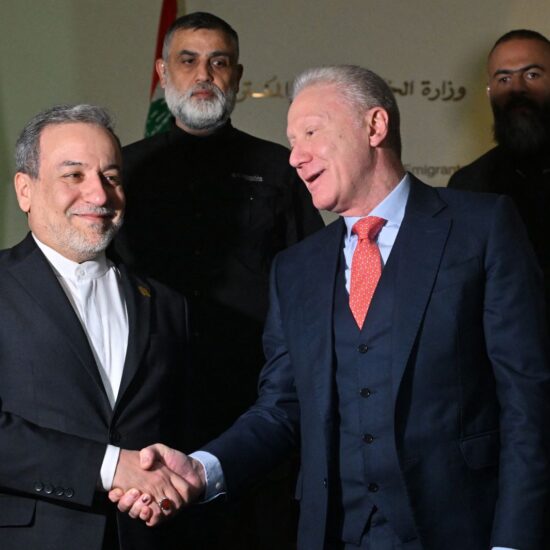
This photograph shows the US embassy in Rome on July 14, 2026, on the first day of talks between the Lebanese and Israeli delegations on the backdrop of a regional escalation between Washington and Tehran.
Scheduled from August 4 to 6, the talks come at a delicate moment. While the first pilot zone in Zawtar al-Gharbiyeh has been presented as proof that the framework can work, continued Israeli military operations across southern Lebanon underscore how fragile the process remains.
As both sides prepare to meet, they will arrive with markedly different priorities—Lebanon seeking withdrawal and reconstruction, Israel focused on security arrangements and Hezbollah’s disarmament.
Different priorities, different expectations
For Lebanon, the immediate priority remains securing a full and durable ceasefire while pushing Israel to complete its withdrawal from the remaining areas it continues to occupy. Officials are also expected to seek progress on reconstruction, the return of displaced residents to southern villages and the release of Lebanese detainees.
Dr. Mayssaa Abdulkhalek, a Lebanese journalist and researcher in international relations, says Lebanon’s official position has remained unchanged throughout the negotiations.
“The first issue Lebanon will insist on is a complete ceasefire because violations continue, particularly the explosions and military operations taking place in border areas,” she told NOW.
She argues that Beirut also wants to build on what it considers the success of the first pilot zone in Zawtar al-Gharbiyeh by discussing the establishment of a second pilot zone in Zawtar al-Sharqiyeh, alongside further Israeli withdrawals.
“The Lebanese state will continue insisting on a complete Israeli withdrawal,” she said.
Israel, meanwhile, is expected to focus primarily on security arrangements designed to ensure that all weapons south of the Litani River remain under the exclusive authority of the Lebanese state. From Israel’s perspective, the implementation of the agreement cannot be separated from addressing Hezbollah’s military infrastructure, a position Israeli officials have repeatedly reaffirmed.
Those contrasting priorities mean that while both sides remain committed to negotiations, they continue to disagree on the sequence in which the framework should be implemented.
Pilot zones under the spotlight
The Rome meeting is also expected to assess the performance of the first pilot zone before deciding whether the model can be expanded.
The Rome meeting is also expected to assess the performance of the first pilot zone before deciding whether the model can be expanded.
The pilot zone mechanism is intended to allow Israeli withdrawals to proceed in parallel with the deployment of the Lebanese Armed Forces and the removal of non-state weapons from designated areas. Supporters argue that the phased approach offers a practical path toward restoring state authority without risking a sudden security vacuum.
For the Lebanese government, the initiative has become more than a security mechanism. It has also evolved into a political demonstration that state institutions, not armed groups, can gradually re-establish their presence across the south.
Whether that model can be replicated, however, remains uncertain.
According to Dr Mayssaa, Israel’s priorities suggest that further withdrawals may not happen as quickly as Lebanon hopes.
“I believe the process of Israeli withdrawals may be delayed because Israel’s priority is Hezbollah’s disarmament rather than withdrawal itself,” she said.
That assessment reflects one of the central dilemmas facing the negotiations. While Lebanon views Israeli withdrawal as a prerequisite for consolidating state authority, Israel sees the dismantling of Hezbollah’s military capabilities as the condition for any further territorial concessions.
Diplomacy tested by developments on the ground
The talks also come as military developments continue to outpace diplomatic efforts.
Despite the U.S.-mediated framework, Israeli forces have intensified operations across parts of southern Lebanon in recent days, carrying out large-scale demolitions that the Israeli military says targeted Hezbollah infrastructure.
Among the most significant operations was the destruction of tunnel networks near Beaufort Castle, where Israel said hundreds of tons of explosives were used, while surveillance drones have continued flying over Beirut.
For Lebanese officials, such operations represent ongoing violations that undermine confidence in the negotiating process. For Israel, they are presented as necessary measures against Hezbollah’s military infrastructure pending the agreement’s full implementation.
Dr Mayssaa believes recent events illustrate Israel’s strategic priorities.
“There had already been concerns that if the Lebanese state did not place all weapons under its authority, Israel would carry out that mission itself,” she said. “What we are witnessing now reflects exactly that approach.”
She argues that the latest military operations demonstrate why the negotiations remain so difficult.
“Lebanon wants these negotiations to produce a ceasefire, an Israeli withdrawal, reconstruction, the return of detainees and the return of residents to their towns and villages,” she said. “But under the current circumstances, I believe this remains a highly complicated path.”
The Rome meeting is unlikely to resolve the core disagreements that have long defined the relationship between Lebanon and Israel.
Questions surrounding Hezbollah’s future military role, Israeli security demands and the pace of withdrawals remain politically sensitive for both governments. Even if negotiators agree to expand the pilot zone model, implementation is likely to remain gradual and vulnerable to developments on the ground.
Nevertheless, the talks represent an important test for the framework itself.