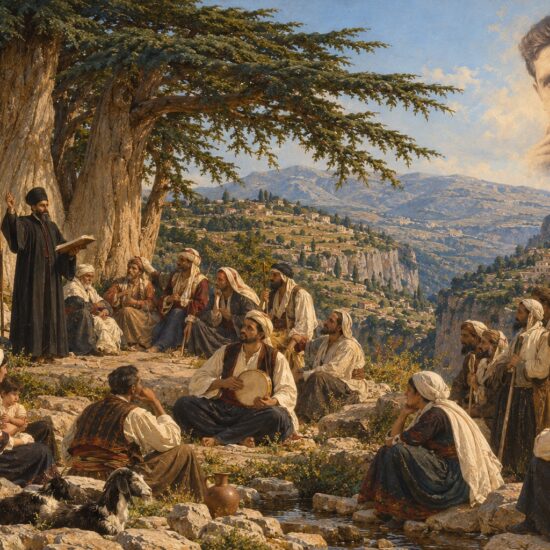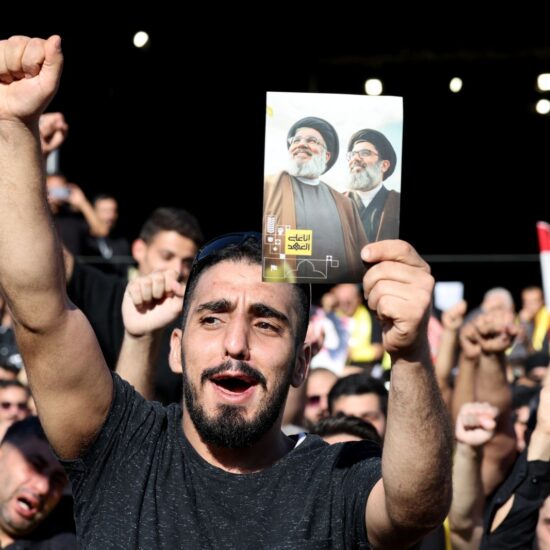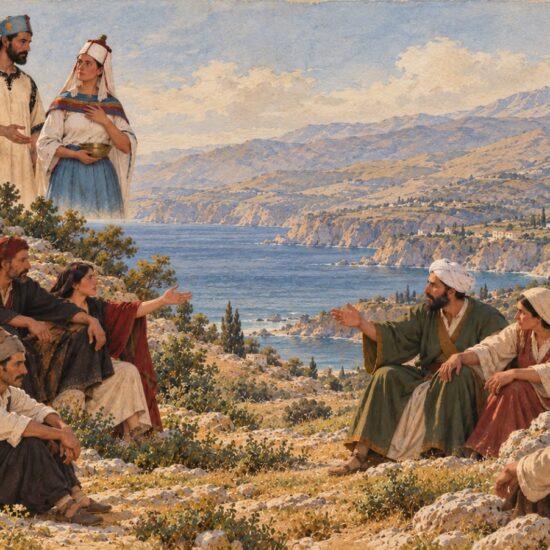
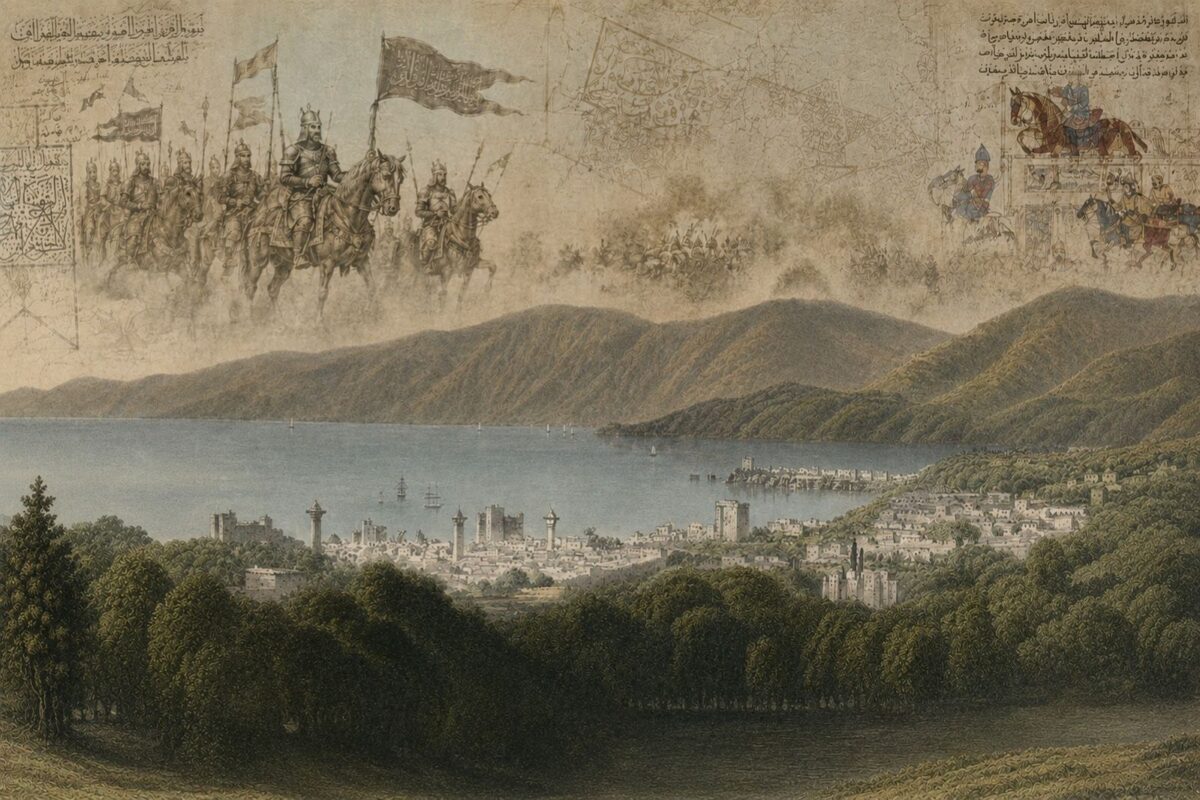
AI GENERTED IMAGE
Fictionalized Pasts, Polarized Digital Presents in Lebanon
The outbreak of hostilities between Hezbollah and Israel has produced, alongside its immediate military and humanitarian consequences, a striking phenomenon in the Lebanese public sphere: the sudden and sustained circulation of medieval history. Mamluk military expeditions conducted against the Kisrawan region in 1292, 1300, and 1305, episodes belonging to the turbulent closing decades of the Crusader period in the Levant, have resurfaced across social media platforms and television interviews operating within Hezbollah’s orbit. The mobilization of this history is neither spontaneous nor incidental. These campaigns have been systematically reworked into a foundational narrative asserting that Twelver Shiites were the singular targeted community of the Mamluk expeditions, and by extension, that their primordial presence, demographic precedence, and unbroken tradition of resistance constitute the defining historical experience of Lebanon.
Any critical assessment of these claims requires, as a first step, addressing a series of foundational questions: what was Kisrawan in the period? Was it the only region targeted by the Mamluk expeditions? What drove the sultanate to launch three successive military operations against it? Who inhabited the area? And what followed in the wake of the final campaign? The answers that the sources provide diverge, in almost every particular, from the narrative currently in circulation.
Nowadays, Kisrawan is a caza in Lebanon with a predominantly Maronite population, with some small Shiite villages. Yet Bilad Kisrawan, or Jabal Kisrawan, designated back then a loosely defined highland zone whose boundaries followed the Sannine and Knayseh mountains to the east, the Nahr Ibrahim valley to the north, the Jam’ani river (1) in what is now the Metn to the south, and the Mediterranean littoral to the west. Yet it was not the only region targeted in this period. Victorious against the Mongols in Ayn Jalut in 1260, the Mamluks had conquered most of Bilad al-Sham. Yet Crusaders were still on the coast, and the highlands between Crusader-ruled cities and Mamluk authority were a frontier zone where the two groups did not exert full control. In this context, Mamluks launched expeditions against the Jebbeh Maronite area in 1268 and 1283 (2), opening the way to the conquest of Tripoli in 1289. Again, in this context, the significance of Kisrawan was, above all, strategic. It commanded the central highlands of Mount Lebanon, controlled the Nahr el-Kalb pass, the critical chokepoint regulating the coastal road between Beirut and Tripoli, and held the overland route connecting Damascus through the Bekaa valley to Beirut. In addition, recent studies indicate that the region contained iron mines, some of which remained in operation in Marjaba into the late 1950s (3).
The conquest of Tripoli in 1289 and the subsequent construction of a new Mamluk urban center on a different site transformed the city into a regional seat of authority, and rendered the pacification of the highland corridor between Damascus, Beirut, and Tripoli a pressing imperial necessity. Controlling the Kisrawan pass, securing the routes connecting these three centers, and potentially exploiting the region’s iron resources together constituted a material and geopolitical foundation for the expeditions.
The available sources complicate any straightforward reading of the campaigns as a religiously motivated operation directed against a single confessional community. The expeditions targeted not only Kisrawan proper but also the two Jurd, the highlands encompassing present-day Metn, Baabda, and Aley, and the al-Diniyya area (4). The populations inhabiting these zones are identified in various chronicles as heterodox groups through a range of terms: Rawafid, Diniyya, Nusayri (Alawites), Tayamina, and Hakimiyya, the two latter designations referring to Druze. Furthermore, the role of Ibn Taymiyya in these events demands careful examination. The Damascene Hanbali jurist (1268–1328) is believed to have issued a fatwa sanctioning the campaigns on the grounds that the mountain population practiced heterodox beliefs and had collaborated with both the Crusaders and the Mongols. Yet the relationship between his juridical output and the Mamluk military apparatus was far from straightforward. There is no evidence to support the text of this fatwa. Mamluk sultans and their deputies did not seek such a fatwa in previous campaigns against Kisrawan. Had the sultans or their deputies requested such a fatwa, they would have presented it to the scholars of Damascus, not to a single scholar in particular (5). Whether the Mamluk authorities mobilized his fatwas to legitimize expeditions already determined on strategic grounds, or whether Ibn Taymiyya instrumentalized the campaigns to advance his own religious program (6), remains an open question, and one that current narratives consistently foreclose (7).
Ibn Taymiyya’s supposed involvement, nonetheless, extended beyond the doctrinal. He participated in person in the third and largest campaign, and subsequently addressed two letters that constitute primary sources on the expeditions: one to his cousin in Damascus, and another celebrating the punitive operation addressed to the Mamluk sultan Qalawun. In the first, he does not identify the Kisrawani population as Twelvers or Rawafid. In the second, he uses the terms Rawafid and Khawarij, and references their leader of the Bani al-‘Awd dynasty, but also notes that among them lived Ismailis, Nusayris, Hakimiyya, that is, Druze, and Batiniyya (8).
Furthermore, in his famous Minhaj al-Sunna, Ibn Taymiyya states that the dominant groups were the Rafidis and the Nusayris (Alawites), in addition to other “corrupt beliefs” alongside them (9). However, what the current narratives obscure is the deeply contentious relationship between Ibn Taymiyya and the Mamluk state: he was summoned to answer for his theological positions, imprisoned on multiple occasions, and died in 1328 in the Damascus citadel, where he had been confined by the sultan following a prohibition on the issuing of further fatwas. The juridical instrument invoked today as evidence of Shia persecution was produced by a scholar whom the same sultanate ultimately silenced.
Returning to the question of the identity of the inhabitants, the chronicle tradition adds further dimensions to this confessional complexity. Historians writing from the urban centers offer divergent readings. Al-Yunini (1242–1326), writing from Damascus, among the earliest chroniclers of the expeditions, employs the term “Jabaliyyin,” mountaineers, and identifies the population as inhabitants of the mountain of al-Jurdayn and Kisrawaniyyin, resorting to geographical rather than confessional designation. Abu al-Fida (d. 1331), the Ayyubid emir of Mamluk Hama, identifies the population as Nusayris (Alawites) and Mariqin, the deviant.
Writing from the peripheries, the fifteenth-century Druze emir Salih ibn Yahya (10) and the chronicler Ibn Sbat (11) both identify the population as Druze and Kisrawanis. The Maronite bishop Ibn al-Qila’i (d. 1516) maintained that they were Maronites (12), a claim echoed in a now-lost source attributed to Tadros, the thirteenth-century Maronite bishop of Hama. The cumulative weight of this evidence, whether produced in the imperial centers of Cairo and Damascus or in the peripheries of Mount Lebanon, points consistently toward a heterogeneous population rather than a Twelver Shia constituency.
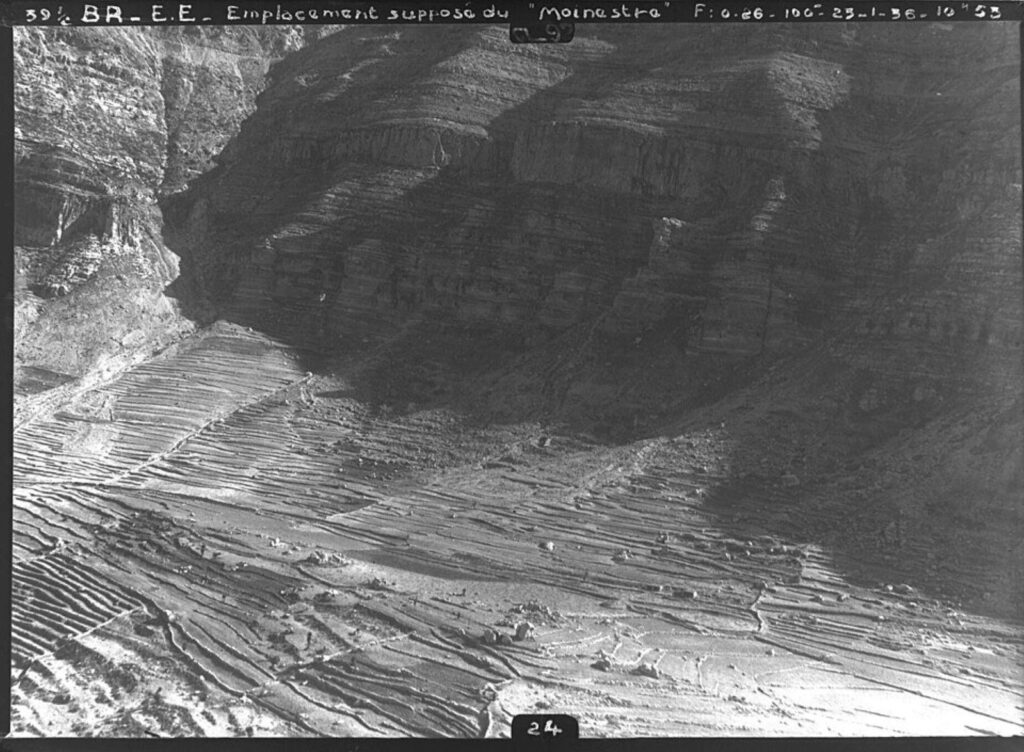
Highlands of Kisrawan-1936 (Liban, Kesrouan, Le moinstre (Mheistri), vue aérienne oblique, Institut Français Du Proche-Orient (IFPO), Armée Du Levant)
The three campaigns unfolded with escalating intensity and shifting rationale. The first, in 1292, led by the viceroy Badr al-Din Baydara, constituted a punitive raid targeting the highland population for its perceived collaboration with the Crusaders; it was limited in scope and indecisive in outcome. The second, in 1300, was directly precipitated by the Mamluk defeat against the Mongols in 1299: retreating Mamluk forces passing through Kisrawan were mistreated by the local population, stripped of their weapons, and sold in captivity as slaves to the Crusaders. The third, in 1305, commanded by the governor Aqqush al-Afram with Ibn Taymiyya present in the expeditionary force, proved decisive: it produced the mass destruction of villages, large-scale displacement, and the systematic burning of trees and agricultural land. The aftermath is encoded in the name given to the northern parts of Kisrawan: al-Futūḥ, “the Conquests.” The region was transformed into a Mamluk iqta‘ assigned to a Turcoman clan. This clan, known in local historiography as the Assaf Emirate, governed Kisrawan from 1306 into the Ottoman period until 1590. The Assaf emirs pursued a policy of repopulation, drawing Maronite settlers from the north alongside Shia and Sunni farmers from the Bekaa, a process recorded later by Maronite Patriarch al-Duwayhi in his Tarikh al-Azmina in the late seventeenth century (13).
This process opened the way for the gradual demographic expansion of the Maronite population in Kisrawan through the sixteenth and seventeenth centuries. The Sunni and Turkoman presence receded over the course of the sixteenth century, while a number of Shia villages survived into the modern period. Alawites and other heterodox groups, however, disappeared entirely during the late Mamluk and early Ottoman period.
The confessional identity of Kisrawan’s pre-1305 inhabitants remains a matter of unresolved scholarly debate. Available sources attest to a Twelver Shia presence, but its scale and exclusivity are far from settled. Maronite, Melkite, Alawite, and Druze communities all maintained a foothold in the region, and sources originating in both the imperial centers of Damascus and Cairo and the local chronicle traditions of Mount Lebanon converge in suggesting a heterogeneous rather than confessionally uniform population.
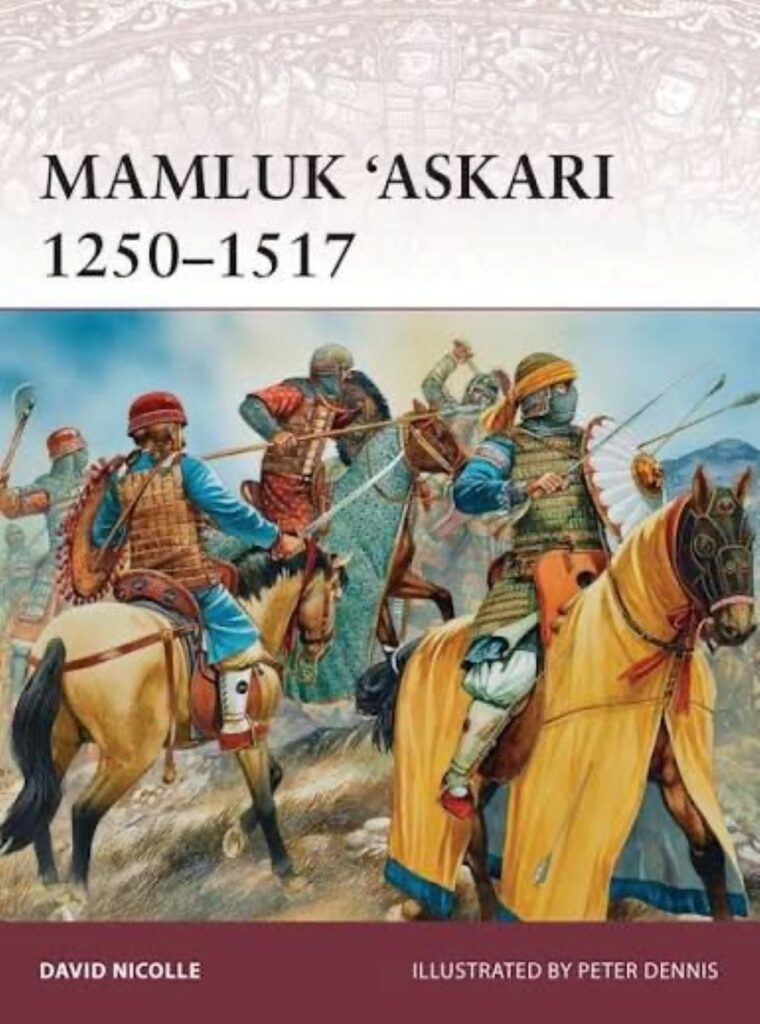
Cover of Mamluk ‘Askari 1250–1517 (Osprey Warrior Series #173) Published by Osprey in 2014, by David Nicolle with illustrations by Peter Dennis
“Who owns Kisrawan?” is a question produced by the crisis itself. Fictionalized pasts, amplified through digital platforms and organized within the Hezbollah political orbit, deepen Lebanon’s fractures rather than reckon with them. By claiming retroactive and exclusive ownership of Kisrawan, these narratives target the Maronites as an internal enemy rather than an external one, polarizing society and anchoring public discourse in invented precedents rather than in the possibility of a shared future.
The Mamluk campaigns of 1292, 1300, and 1305 were real and consequential events, driven by a convergence of strategic, material, and religious motives, and directed against a population that the sources themselves describe as confessionally diverse. The digital narratives convert that complexity into a political instrument, offering a community that has endured an unprecedented scale of destruction and loss a compensation for present defeat through the fictional conquest of a medieval past.
When a polarized historical narrative is deployed to mobilize a community already devastated by the consequences of the project it serves, public history ceases to be an interpretive exercise and becomes a contributing cause of future destruction. Lebanon has paid dearly for the weaponization of memory. It cannot afford to pay again.
Charles al-Hayek is a public historian and the founder of Heritage and Roots.
The views in this story reflect those of the author alone and do not necessarily reflect the beliefs of NOW.
Endnotes
(1) Tributary of the Beirut River running through the Hamana valley.
(2) Baroudi, Fadi. “La grotte de ‘āṣi al-Ḫadaṯ: de la documentation historique à l’exploration archéologique.” In Momies du Liban: rapport préliminaire sur la découverte archéologique de ‘āṣi al-Ḫadaṯ (XIIIe siècle), 82–145. Beirut: Edifra, 1994.
(3) https://www.ifporient.org/afer/
(4) Talhamy, Y. (2019). “The Kisrawan Expeditions against Heterodox Religious Minorities in Syria under Mamluk Rule.” Chronos, 20, 129–155. https://doi.org/10.31377/chr.v20i0.477
(5) https://archive.org/details/20221114_20221114_1513/page/56/mode/1up, p. 56.
(6) https://shamela.ws/book/7289/13139
(7) Talhamy, Y. (2019). “The Kisrawan Expeditions against Heterodox Religious Minorities in Syria under Mamluk Rule.” Chronos, 20, 129–155. https://doi.org/10.31377/chr.v20i0.477, p. 130.
(8) https://archive.org/details/20221114_20221114_1513/page/39/mode/1up, p. 42.
(9) https://archive.org/details/20221114_20221114_1513/page/49/mode/1up, p. 49.
(10) Hours, Francis and Salibi, Kamal, eds. Sāliḥ b. Yaḥya: Tārīḫ Bayrūt, récits des anciens de la famille de Buḥtur b. ‘Ali, émir du Gharb de Beyrouth. Beyrouth. Série 4: Histoire et Sociologie du Proche Orient, Tome XXXV 12. Beyrouth: Dar el-Machreq Éditeurs (Imprimerie Catholique), 1969.
(11) https://archive.org/details/elshandawily9099
(13) https://archive.org/details/20251225_20251225_1559/page/n415/mode/1up, p. 392.