
The Memorandum of Understanding recently signed between the World Lebanese Cultural Union (WLCU) and the Civic Influence Hub (CIH) has been presented as a historic partnership intended to strengthen cooperation between Lebanon and its global diaspora. The principles it invokes—sovereignty, constitutional legitimacy, citizenship, peace, diversity, and positive neutrality—are aspirations shared by many Lebanese.
The question, however, is not whether these principles are worthy.
The question is whether this partnership is compatible with the institutional mission for which WLCU was created.
That question deserves thoughtful and open discussion throughout the Union’s worldwide membership.
The Unique Role of WLCU
For decades, WLCU has occupied a unique place within the Lebanese diaspora. Few institutions have succeeded in bringing together Lebanese across continents, religions, political affiliations, and generations while preserving a common sense of identity and purpose.
Its strength has never been ideological uniformity.
Its strength has always been its diversity.
WLCU was not established to advocate a particular political or public-policy agenda. Rather, it was created to represent Lebanese communities throughout the world regardless of their political, religious, or regional differences. That representative character—and the neutrality it requires—has long been the foundation of the Union’s legitimacy.
A Different Institutional Mission
The Civic Influence Hub serves a fundamentally different role.
CIH is a policy and governance organization dedicated to constitutional reform, public-policy development, and advocacy for its vision of Lebanon’s future. Like every civil society organization, it is fully entitled to promote its ideas and build partnerships in pursuit of its objectives.
The issue, therefore, is not CIH’s legitimacy.
The issue is institutional compatibility.
A policy-advocacy organization and a representative diaspora federation fulfill different functions.
One develops policy positions.
The other represents people who may legitimately hold different policy positions.
Those missions may complement one another.
They are not the same.
Why the Memorandum Raises Governance Questions
The Memorandum extends well beyond cultural cooperation or symbolic collaboration. It speaks of coordinated advocacy, public-policy papers, strategic engagement, and cooperation in advancing national priorities.
Those commitments inevitably require institutional choices.
Which reforms?
Which priorities?
Who determines them?
Through what representative process?
Institutional independence is not merely one of WLCU’s defining strengths. It is the foundation of the confidence that generations of Lebanese communities have placed in the Union.
The essential governance question is whether those choices will continue to emerge from WLCU’s own representative institutions or increasingly reflect the strategic priorities developed by its institutional partner.
Recent public communications associated with the partnership have encouraged support for proposed amendments to WLCU’s constitutional framework. If accurately understood, those communications suggest that the partnership may already be extending beyond cooperation into matters affecting WLCU’s internal governance.
Regardless of one’s views regarding those proposed amendments, one principle should remain beyond dispute:
Institutional independence is not merely one of WLCU’s defining strengths. It is the foundation of the confidence that generations of Lebanese communities have placed in the Union.
Structural Asymmetry and Institutional Accountability
The partnership also presents a structural asymmetry.
CIH is a relatively compact policy organization.
Long-term institutional partnerships are entirely appropriate when accompanied by meaningful mechanisms of accountability: regular reporting to representative bodies, transparency regarding the obligations assumed by each party, and clear procedures allowing future leadership to review, amend, renew, or terminate the agreement if circumstances require.
WLCU is a global federation governed through elected leadership and representative institutions.
Within this relationship, CIH contributes policy frameworks and strategic direction, while WLCU contributes something equally valuable: worldwide representation, institutional legitimacy, historical continuity, and an established global network.
That arrangement may create meaningful opportunities for both organizations.
It may also create the perception that WLCU is lending its representative legitimacy to policy positions that have not been broadly debated or endorsed through its own institutional processes.
The five-year duration of the Memorandum raises an additional governance consideration.
WLCU’s leadership changes through regular democratic elections on a much shorter cycle. Future presidents and future World Councils may therefore inherit strategic commitments negotiated by previous administrations.
Long-term institutional partnerships are entirely appropriate when accompanied by meaningful mechanisms of accountability: regular reporting to representative bodies, transparency regarding the obligations assumed by each party, and clear procedures allowing future leadership to review, amend, renew, or terminate the agreement if circumstances require.
Without such safeguards, long-term commitments risk outlasting the accountability that should accompany them.
The Larger Institutional Question
These concerns are not about personalities.
Nor are they about questioning the good faith of those who negotiated the Memorandum.
They concern WLCU’s institutional identity.
Should WLCU continue primarily as the broad, representative umbrella organization that has united Lebanese communities throughout the world for generations?
Or should it gradually evolve into an institution that participates directly in Lebanon’s constitutional and public-policy debates through long-term partnerships with advocacy organizations?
Reasonable people may answer those questions differently.
What matters is that the discussion occur openly through WLCU’s own constitutional institutions, with meaningful participation from its chapters, representative bodies, and worldwide membership.
The Choice Before the Union
Institutions endure because they remain faithful to the purposes for which they were created.
WLCU has endured because it has represented Lebanese before it has represented ideas.
At a time when Lebanon remains deeply divided, the world still needs at least one major diaspora institution capable of bringing Lebanese together without first asking how they vote, which party they support, or which constitutional vision they embrace.
The question before WLCU is therefore larger than this Memorandum of Understanding.
It is whether the Union wishes to remain primarily the representative voice of Lebanese communities around the world, or whether it wishes to become an institutional participant in Lebanon’s public-policy debates.
Both paths are legitimate.
But they are not the same.
The difference between those paths is not merely strategic.
It is institutional.
A careful assessment of the partnership suggests a significant governance risk: over time, WLCU’s institutional priorities, public positions, and external advocacy could increasingly be shaped through its partnership with CIH rather than through the deliberative processes of its own representative bodies.
If that trajectory were to continue, CIH’s institutional influence within the partnership would likely expand, while WLCU could see its greatest strengths—its institutional independence, political neutrality, and representative legitimacy—gradually diminished.
The central concern, therefore, is not whether CIH should advocate its vision for Lebanon.
It is whether WLCU can preserve its constitutional identity and institutional autonomy while entering a long-term strategic partnership with an organization whose primary mission is policy advocacy.
That decision should not rest with one administration, one chapter, or one generation of leaders.
It belongs to the worldwide membership whose diversity has always been WLCU’s greatest strength—and whose collective judgment will determine the Union’s future.
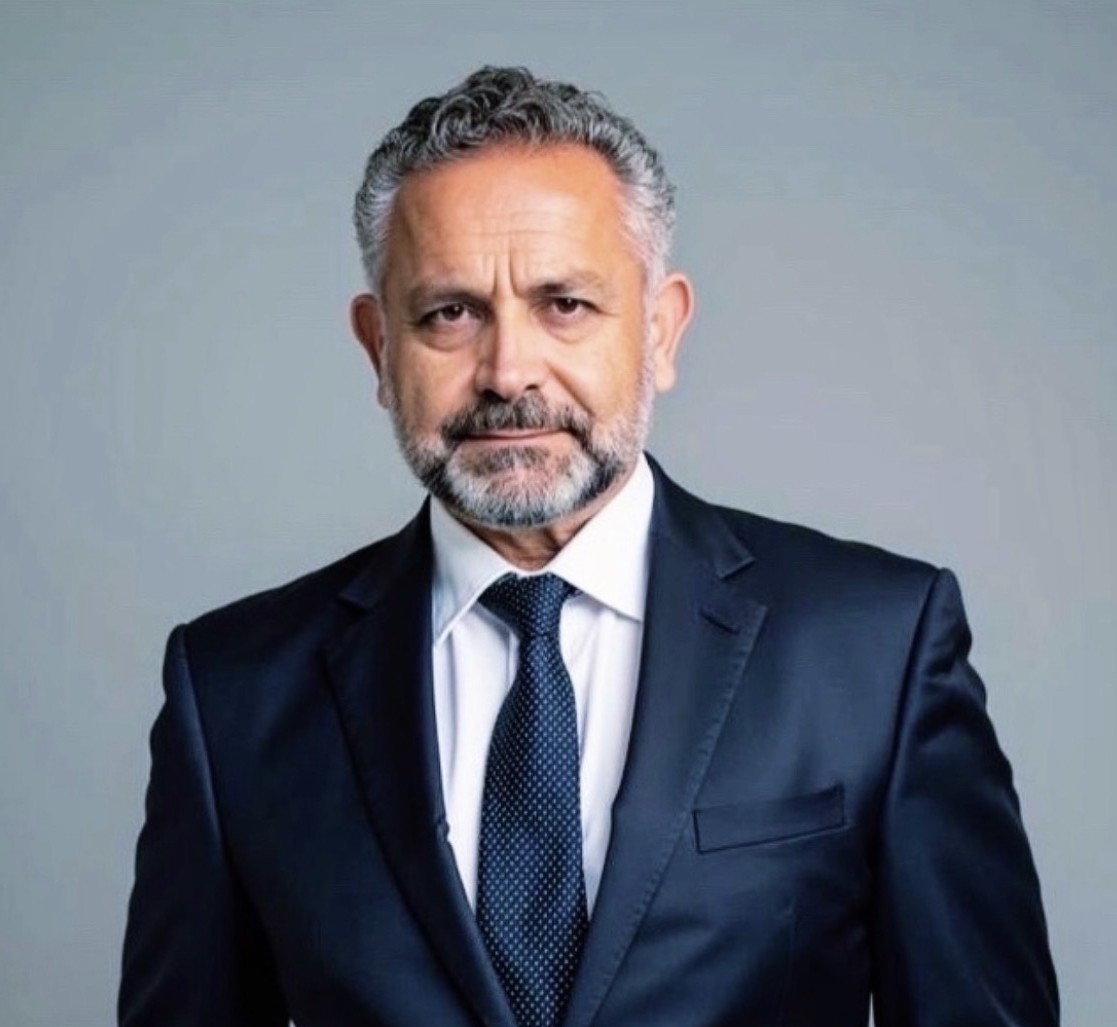
Pierre A. Maroun is the president of Shields of United Lebanon, whose work sits at the intersection of history, identity, and national resilience.
The views in this story reflect those of the author alone and do not necessarily reflect the beliefs of NOW.