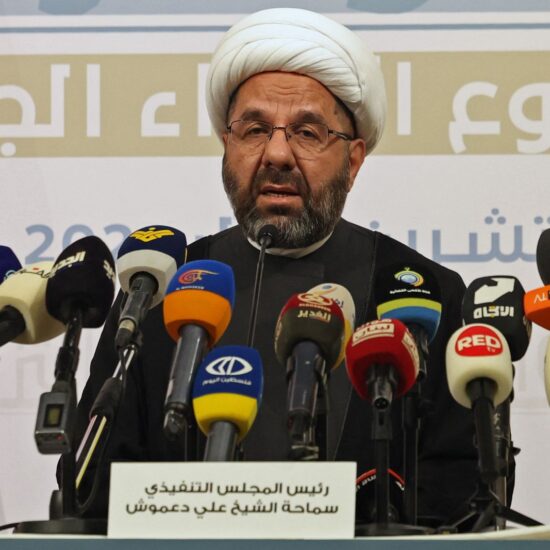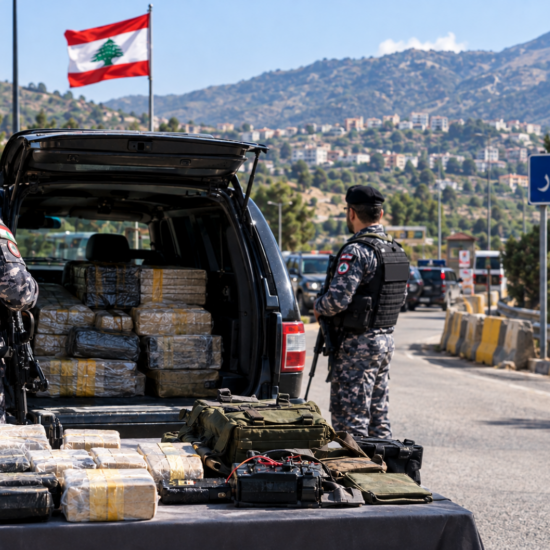
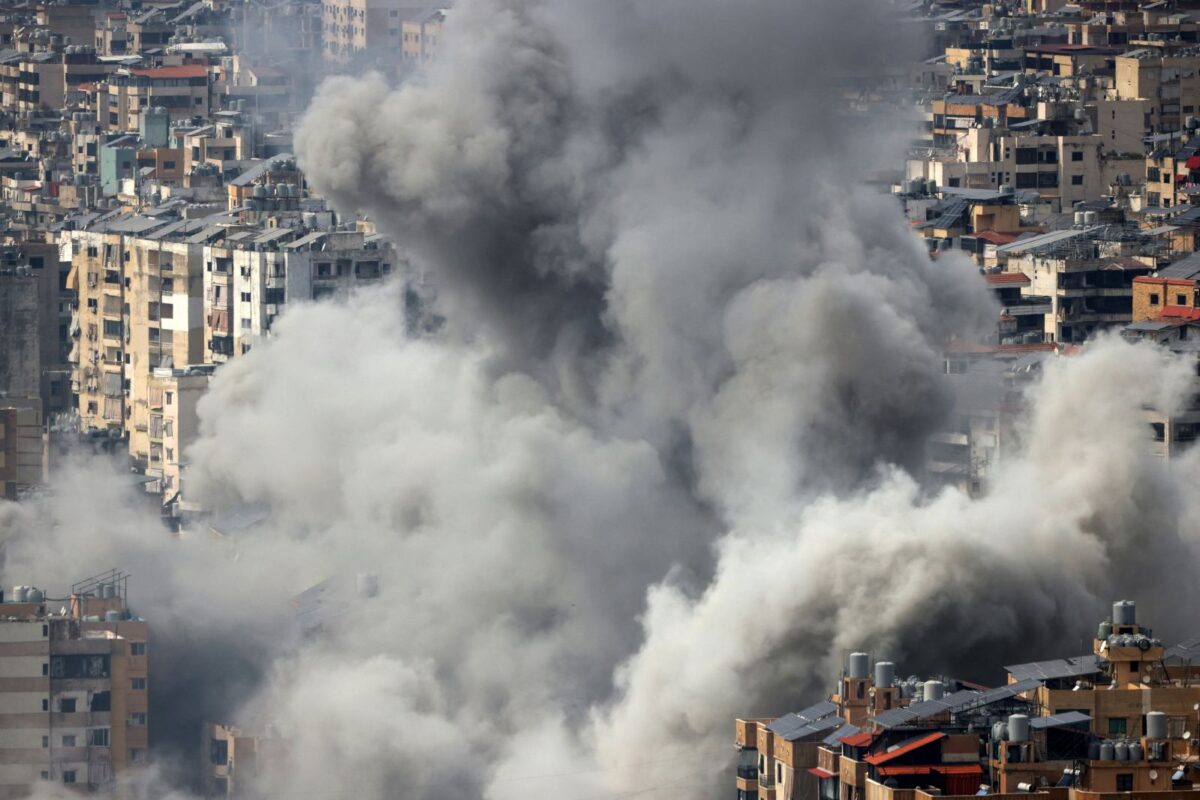
Lebanon’s leadership is facing renewed scrutiny over a long-standing contradiction at the heart of the country’s political system: the gap between official declarations of state sovereignty and the continued military role of Hezbollah.
The issue has resurfaced following renewed cross-border tensions with Israel and the Lebanese Cabinet’s decision to reaffirm that only the state holds the authority over war and peace. The Cabinet also instructed the Lebanese Army to develop a plan to enforce a ban on Hezbollah’s military activities.
For critics and analysts alike, the answer lies not only in military capability but in political will and diplomatic strategy.
Credibility under strain
Recent incidents along the southern border have further complicated the situation, with rocket fire and clashes raising doubts about whether the state truly controls decisions related to escalation with Israel.
Sam Menassa, a journalist and political analyst specializing in Middle Eastern affairs, told NOW Lebanon that such developments have significantly undermined the credibility of Lebanese institutions.
“The statements issued by the political authorities and the army no longer carry credibility,” Menassa said. “Not with the Americans, not with the Israelis, and not even with the international committee monitoring the ceasefire.”
According to Menassa, the disconnect between official statements and realities on the ground has weakened Lebanon’s ability to convince international actors that it can enforce its own decisions
“What we have seen is that government decisions about limiting weapons to the state remain largely symbolic,” he said. “There has been no tangible change on the ground.”
The army’s dilemma
At the center of the debate is the Lebanese Army, the institution formally responsible for implementing the Cabinet’s decision.
While the army has historically attempted to maintain internal stability by avoiding direct confrontation with Hezbollah, critics argue that this strategy has allowed the group’s parallel military structure to persist for decades.
Tom Harb, Co-Chair American Middle East Coalition for Democracy, believes the current moment exposes deeper problems within Lebanon’s security establishment.
“The Lebanese government did make a decisive decision,” Harb told NOW Lebanon. “But the army returned with no serious action plan. The issue today is not the government’s position—it is the leadership of the Lebanese army.”
Harb also pointed to growing frustration in Washington over the lack of concrete progress in addressing Hezbollah’s military role.
“American officials don’t want statements anymore,” he said. “They want to see results.”
Washington’s growing impatience
Lebanon’s relationship with the United States, one of the Lebanese Army’s main international supporters, has increasingly been affected by the issue.
Harb said tensions escalated during a recent visit to Washington by Lebanese Army commander General Rodolphe Haykal, where meetings with US officials reportedly ended abruptly after disagreements over Hezbollah’s classification.
“The message coming from Washington is very clear,” Harb said. “If the Lebanese state wants international support, it must demonstrate that it is willing to enforce its own decisions.”
For some policymakers in Washington, the question is no longer whether Lebanon supports the principle of state sovereignty, but whether it has the capacity or willingness to translate that principle into action.
Recent interactions between Lebanese military officials and US policymakers have further highlighted growing frustration in Washington over Lebanon’s handling of Hezbollah’s military role.
“When the head of the Lebanese army met Senator Lindsey Graham, he was asked a simple question: whether Hezbollah is a terrorist organization,” Harb said. “When the answer was no, the meeting effectively ended. That was a very clear message from Washington.”
A diplomatic path?
Despite the pressure for stronger enforcement, Menassa argues that the Lebanese government could pursue alternative strategies that avoid direct confrontation with Hezbollah.
He suggested that Beirut should focus on diplomatic initiatives designed to reshape the broader regional framework in which the conflict operates.
“There are steps the government can take quietly, without provoking a direct confrontation with Hezbollah on the ground,” Menassa said.
One such approach, he argues, would involve launching a major diplomatic initiative aimed at redefining Lebanon’s relationship with Israel.
Menassa proposed that Lebanon could negotiate a new state-to-state agreement replacing the current ceasefire framework, which historically involved Hezbollah as a non-state actor.
“What is needed is a new agreement between the Lebanese state and Israel,” he said. “An agreement that would formally end the war between the two countries and remove Lebanon from the military dimension of the Arab-Israeli conflict.”
Menassa emphasized that such an arrangement would not necessarily amount to a full peace treaty or normalization.
“I am not talking about a peace treaty or diplomatic normalization,” he said. “But about updated security arrangements, border demarcation, and guarantees that would stabilize the situation.”
Limits of international mediation
The debate also comes as questions grow about the effectiveness of the international diplomatic framework overseeing the ceasefire in southern Lebanon.
The so-called “quintet committee”which includes the United States, France, Saudi Arabia, Egypt, and Qatar has been involved in diplomatic efforts to stabilize the country and support political reforms.
However, Menassa believes that this framework has limited influence over the current crisis.
“These mechanisms were designed to monitor ceasefire arrangements,” he said. “But the reality on the ground has already surpassed them.”
Instead, he argues that Lebanon’s leadership must engage directly with international powers through a broader diplomatic campaign.
“This requires the president and the prime minister to lead an international effort,” Menassa said. “Lebanon needs to explain clearly that it is ready to exit the cycle of conflict.”
A moment of opportunity or risk
Both analysts agree that the regional context may shape the outcome of Lebanon’s current predicament.
Harb warned that continued inaction by Lebanese institutions could encourage external actors to escalate their own responses to Hezbollah.
“If the Lebanese state does not enforce its own authority, others will eventually act in its place,” he said. “Israel’s priority is its security, and if it believes Hezbollah remains a threat, it will continue targeting its capabilities.”
Menassa, however, believes the regional landscape may also present Lebanon with a rare opportunity.
“The region is changing,” he said. “Iran itself is going through major internal transformations, and this creates a moment that Lebanon could use to redefine its policies.”
Whether Lebanon’s leadership can seize that opportunity remains uncertain.
For now, the country appears caught between competing realities: the official assertion that the state alone controls war and peace, and the entrenched military power of Hezbollah on the ground.