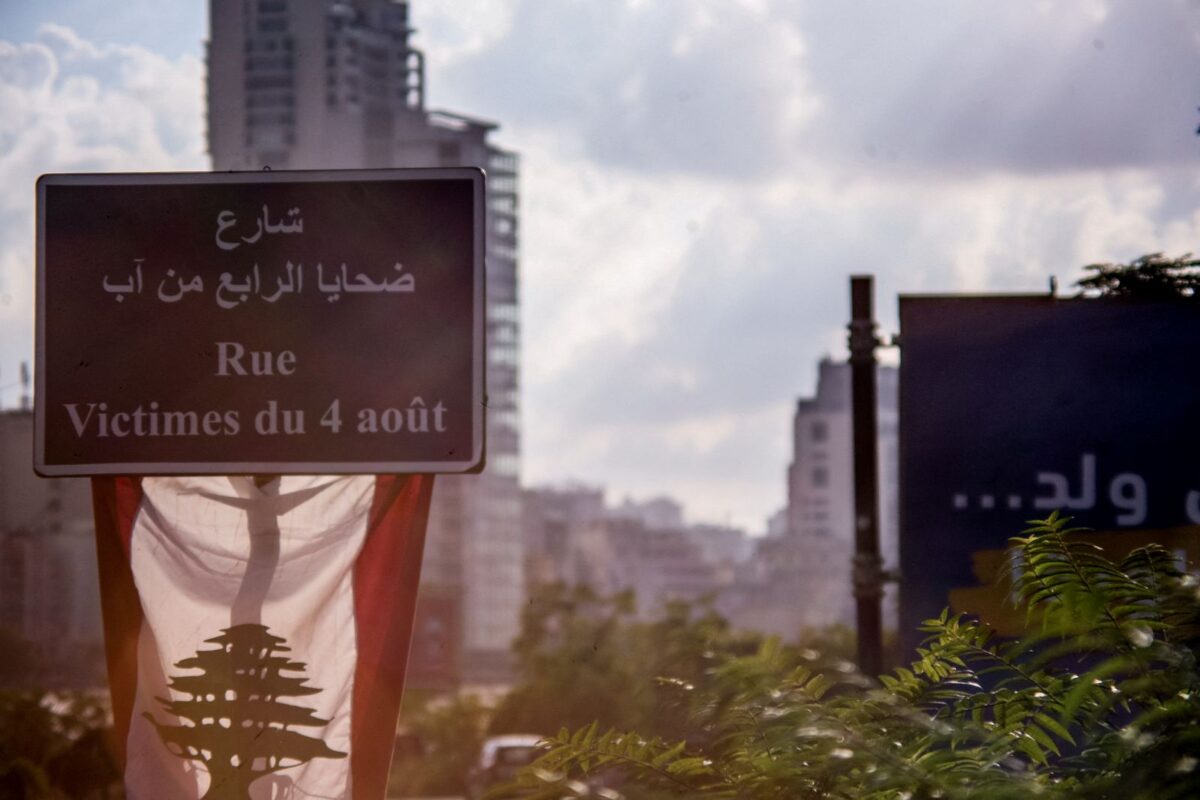
Beirut, LEBANON. Photo by LUCAS NEVES / NURPHOTO / NURPHOTO VIA AFP
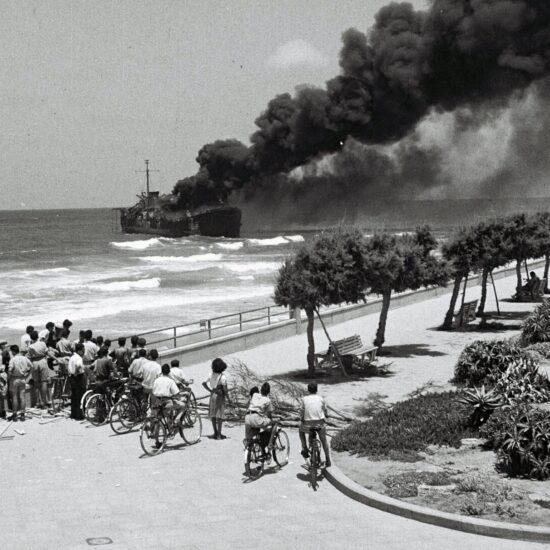
On August 4, 2020, the eyes of the world are on Beirut, Lebanon, after a big explosion in the port.
On August 4, Lebanon will do two things at once. In Rome, it will negotiate over the future of its southern territory. In Beirut, it will commemorate the destruction of its capital. One event asks whether Israel will recognize the authority of the Lebanese state. The other reminds us that, six years later, the Lebanese state has still not demonstrated that authority over itself.
The coincidence is almost too Lebanese. A country seeking sovereignty abroad while searching for accountability at home. A delegation discussing borders, withdrawals and security arrangements while families gather around the port waiting for an indictment that has never arrived.
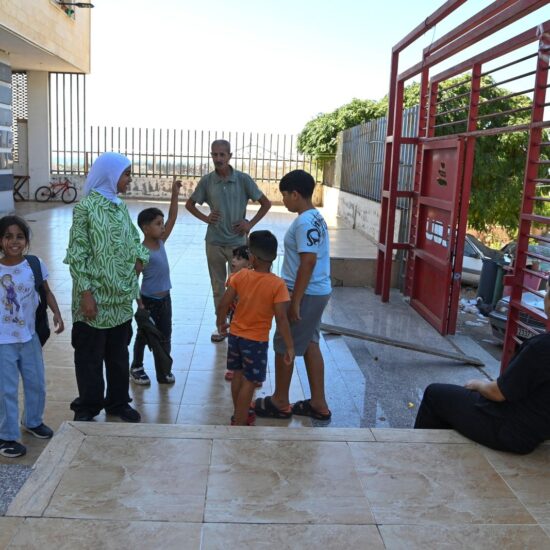
The Rome negotiations matter. Lebanon needs an Israeli withdrawal, an end to attacks, the return of displaced citizens and the deployment of the Lebanese Army across the South. It needs security guarantees that do not leave every village vulnerable to another calculation made in Tehran or Tel Aviv. Negotiation is not surrender. In Lebanon’s current condition, it may be the only serious way to recover territory without destroying what remains of the country. But territory is only one dimension of sovereignty.
Six years after the explosion, the problem is no longer that justice has been delayed. It is that obstruction has itself become a demonstration of power. Israel acts inside Lebanon because it believes Lebanon cannot stop it.
The port investigation is another. It asks whether the Lebanese state can investigate the destruction of its own capital, question powerful officials and produce a legal conclusion. Six years after the explosion, the problem is no longer that justice has been delayed. It is that obstruction has itself become a demonstration of power. Israel acts inside Lebanon because it believes Lebanon cannot stop it. Hezbollah maintains an armed authority beyond the state because it believes the state cannot replace it. Those obstructing the port investigation behave as though political position can protect them from judicial consequence.
These actors are not equivalent, and their responsibilities should not be confused. But they have all learned something similar about Lebanon: the state may protest, negotiate, condemn and commemorate, but it rarely concludes. That is the real connection between Rome and Beirut.
We often treat them as separate files. The South is security. The port is justice. Hezbollah’s weapons are politics. Israel’s occupation is diplomacy. This division makes government easier because it allows every failure to be placed in a different drawer. Yet all these files lead back to the same question: can the Lebanese state produce consequences?
A sovereign state does not just raise its flag. It controls organized violence, enforces its decisions and subjects authority to law. Lebanon currently struggles with all three. It cannot yet force Israel to withdraw, has not fully established the state’s monopoly over war and peace, and has failed to prevent political power from paralyzing the investigation into one of the largest non-nuclear explosions in history.
This failure has psychological consequences as well. When investigations never conclude, agreements are selectively implemented and officials escape accountability, citizens learn not to expect results. They lower their expectations before institutions disappoint them again. This is not simply public frustration. It is learned political helplessness. People stop believing that pressure matters, that participation produces change or that the law reaches beyond the weak. The state then loses more than public confidence. It loses political efficacy: the belief that institutions are capable of acting and that citizens can influence what they do.
President Joseph Aoun’s call for the judiciary to issue the port indictment is therefore important. But Lebanon has accumulated enough calls, promises and solemn speeches. The test is no longer whether officials can describe the importance of justice. It is whether the state can finally deliver it.
The same applies in Rome. Another framework, committee or pilot zone will mean little unless it produces a visible sequence: Israeli withdrawal, Lebanese Army deployment, the dismantling of military structures outside state authority, reconstruction through legitimate institutions and the safe return of residents. Lebanon does not need symbolic sovereignty in the South any more than it needs symbolic justice at the port.
The country should negotiate in Rome with determination. It should demand withdrawal, protection and reciprocity. But it should also understand the weakness it carries into the room. A state that cannot impose consequences at home will always struggle to command respect abroad.
The country should negotiate in Rome with determination. It should demand withdrawal, protection and reciprocity. But it should also understand the weakness it carries into the room. A state that cannot impose consequences at home will always struggle to command respect abroad.
August 4 will therefore commemorate more than one Lebanese tragedy. The first is the explosion that destroyed Beirut. The second is the state’s failure to become powerful enough to prevent, investigate and conclude. Rome may help Lebanon recover part of its territory. The port will tell us whether it has recovered the meaning of being a state.
Ramzi Abou Ismail is a Political Psychologist, Researcher and Analyst.
The views in this story reflect those of the author alone and do not necessarily reflect the beliefs of NOW.