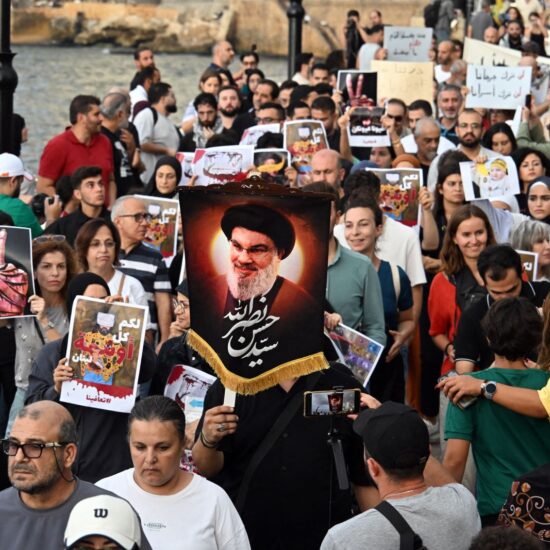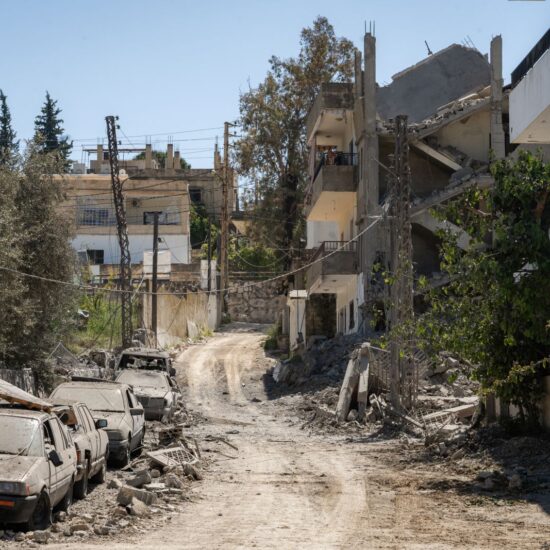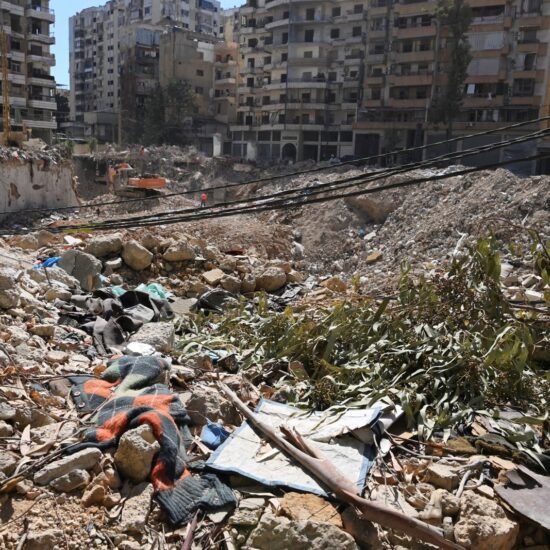
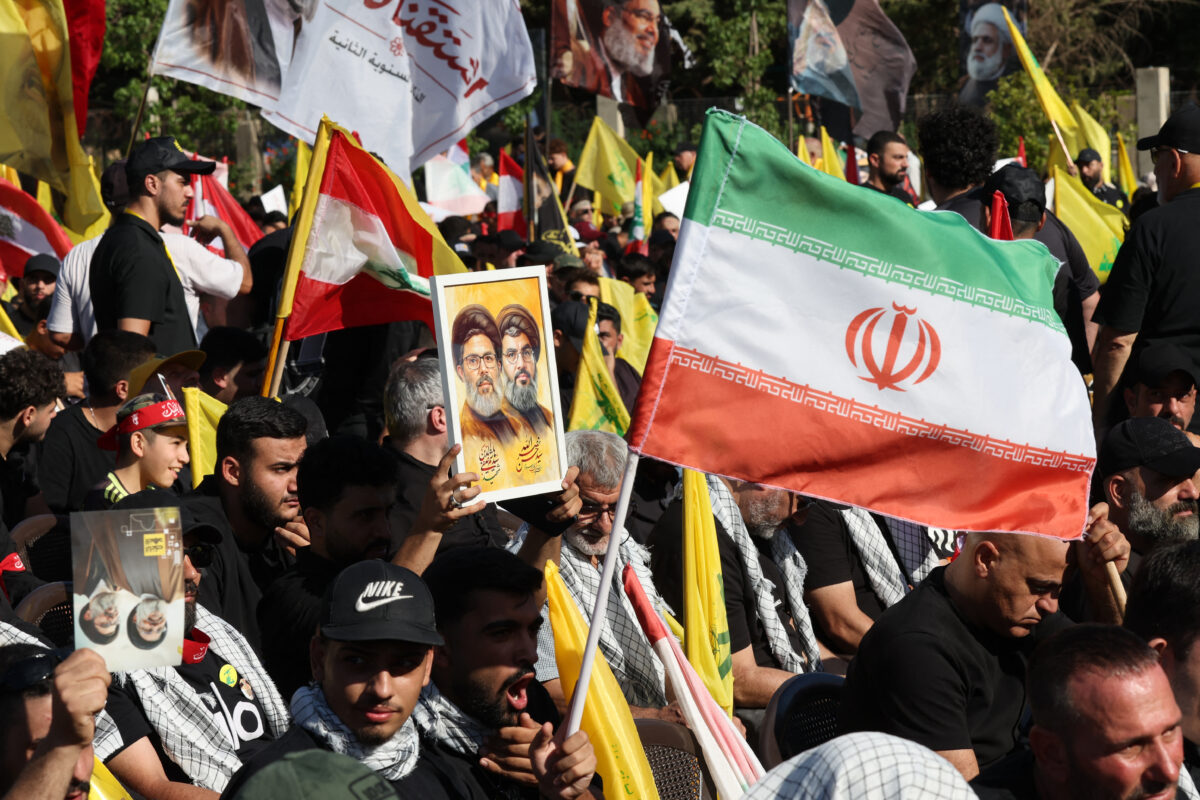
On Sunday, thousands of Hezbollah supporters gathered in Beirut’s southern suburb of Dahiyeh to mark the second anniversary of Hassan Nasrallah’s death. The commemoration came at a difficult moment for the group. Weakened by successive confrontations with Israel and facing mounting pressure from the Lebanese government to surrender its weapons, Hezbollah is operating from a far narrower political and military position than it did under Nasrallah.
In a televised speech, Hezbollah Secretary-General Naim Qassem used the anniversary to reiterate the group’s opposition to the government’s current course. He called for an end to direct negotiations between Israel and the Lebanese government and said talks should instead continue through indirect channels, threatening once again that any negotiations with Israel will ultimately lead to a breakdown in the precarious co-existence on the Lebanese front, alluding to previous episodes of civil strife and war.
Nasrallah was killed on September 27, 2024, in a major Israeli strike on Dahiyeh. A recent media report described how the Israeli military planned the operation to leave little possibility of his survival. “We wanted to make sure Nasrallah would die, if not from the direct hit, then from blood loss or suffocation due to a lack of oxygen,” an Israeli colonel said.
Qassem succeeded Nasrallah after his death, but he inherited a substantially weaker organization and has not consolidated the same authority as his predecessor. Since the onset of the war, reports have suggested that Hezbollah’s leadership is divided over how to respond to military pressure, the Lebanese government’s disarmament agenda and a rapidly changing regional environment.
In Lebanon
Follow-up after UNIFIL withdrawal: The international peacekeeping force is set to leave Lebanon by the end of the year. In New York, during the United Nations General Assembly (UNGA), Lebanese Prime Minister Nawaf Salam warned of “the vacuum that could be created by the withdrawal of UNIFIL.” He also said that a “new international force” should replace the troops to help monitor the situation.
Lebanon-Iran talks: On Thursday, Nawaf Salam called for “new relations” with Tehran during a rare meeting in New York with Iranian President Masoud Pezeshkian. Salam said Lebanon does not want to be pulled into regional conflict and that relations between the two countries should instead be based on “respect for each other’s sovereignty.”
Lebanon and Syria moving closer: On the sidelines of the UN summit, Salam met Syrian President Ahmad al-Sharaa to discuss strengthening ties between the two countries. Salam pointed to “strengthening regional connectivity projects, especially in the fields of electricity, railways and energy.”
Aoun says Israel must respect international law: During several speeches on Friday, Lebanese President Joseph Aoun said Israel “is not an exception” and therefore must also abide by international law during its war with Hezbollah. He referred in particular to Israeli attacks affecting the Lebanese Red Cross.
In the Region
Iran-US talks expected this week: American President Donald Trump told Axios on Sunday that he expects negotiations with Iran to be held this week. Trump rebuked the Iranian demands, saying that the U.S. would not agree to these conditions. “They want to make a deal, but it is not the deal that I want to make,” Trump said.
Iran’s seven-day plan: Last week, Tehran proposed a plan to reopen the Strait of Hormuz based on certain conditions. Washington would have to lift the naval blockade on Iranian ports and unfreeze some Iranian assets. In return, talks about Iran’s nuclear programme could resume. Trump already rejected the plan last week, but Iran’s foreign minister Abbas Araghchi insisted on sticking to the plan’s conditions, saying that Iran “will not back down from them”.
Netanyahu flies to UAE: Israeli Prime Minister Benjamin Netanyahu flew to Abu Dhabi on Sunday, according to Israeli media. Netanyahu is reportedly set to meet with Emirati President Mohamed Bin Zayed (MBZ). A few weeks ago, Israeli media reported that MBZ warned Netanyahu prior to the October 7 attack.
Sharaa says Golan Heights belong to Syria: During the UN summit in New York, Syrian President Ahmad al-Sharaa said that the Israeli-occupied Golan Heights are Syrian and that the territory should be returned.
What We’re Reading
The Arithmetic of Multilateralism. Khalil Gebara questions the validity and importance of the UN and other multilateral institutions. While these systems provide necessary aid, they are often unfit to address today’s problems, Gebara argues.
Hezbollah: A Factory of Saints and a Graveyard for Accountability. Now’s managing editor Makram Rabah argues that the commemoration of Nasrallah is used by Hezbollah to reinforce loyalty for the group.
What’s Really on Your Plate? Charles H. Al-Hayek takes the reader back to the history of Lebanese cuisine. He examines how thousands of years of migration have shaped today’s food.
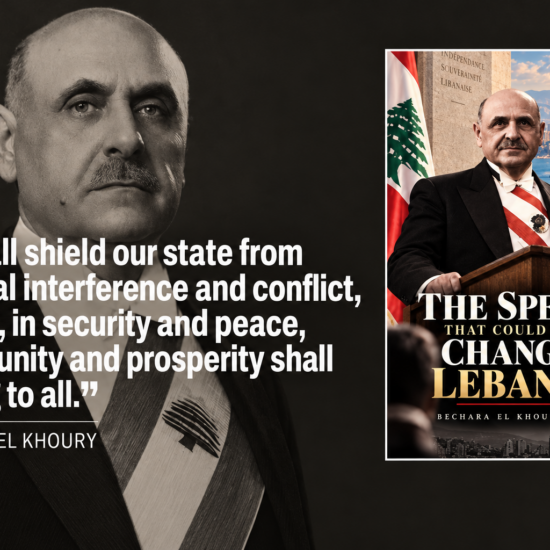
The Day After Hezbollah: Who Will Build Lebanon’s New Security Order? Ibrahim Rihan says that while Lebanon must disarm Hezbollah, the military also needs to be strengthened. He argues that the army will eventually have to secure the South, keep tabs on Hezbollah and oversee the Israeli withdrawal.
Sheikh Naim, I’m Fifty. Let’s Talk About the Price. Elissa El Hachem writes an imagined dialogue with Hezbollah leader Naim Qassem in which she criticises the cost of Hezbollah’s resistance for Lebanese people.