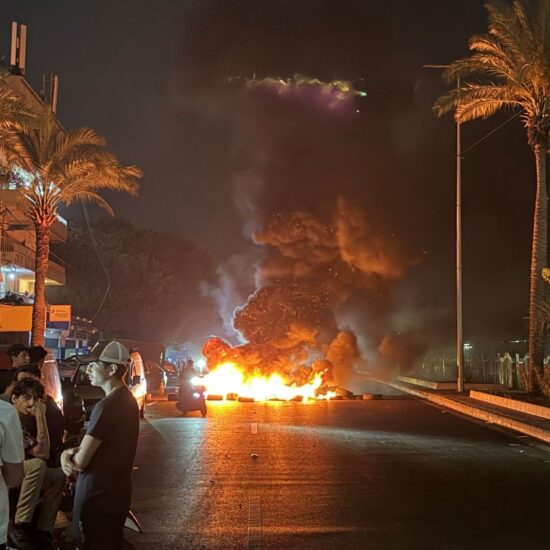
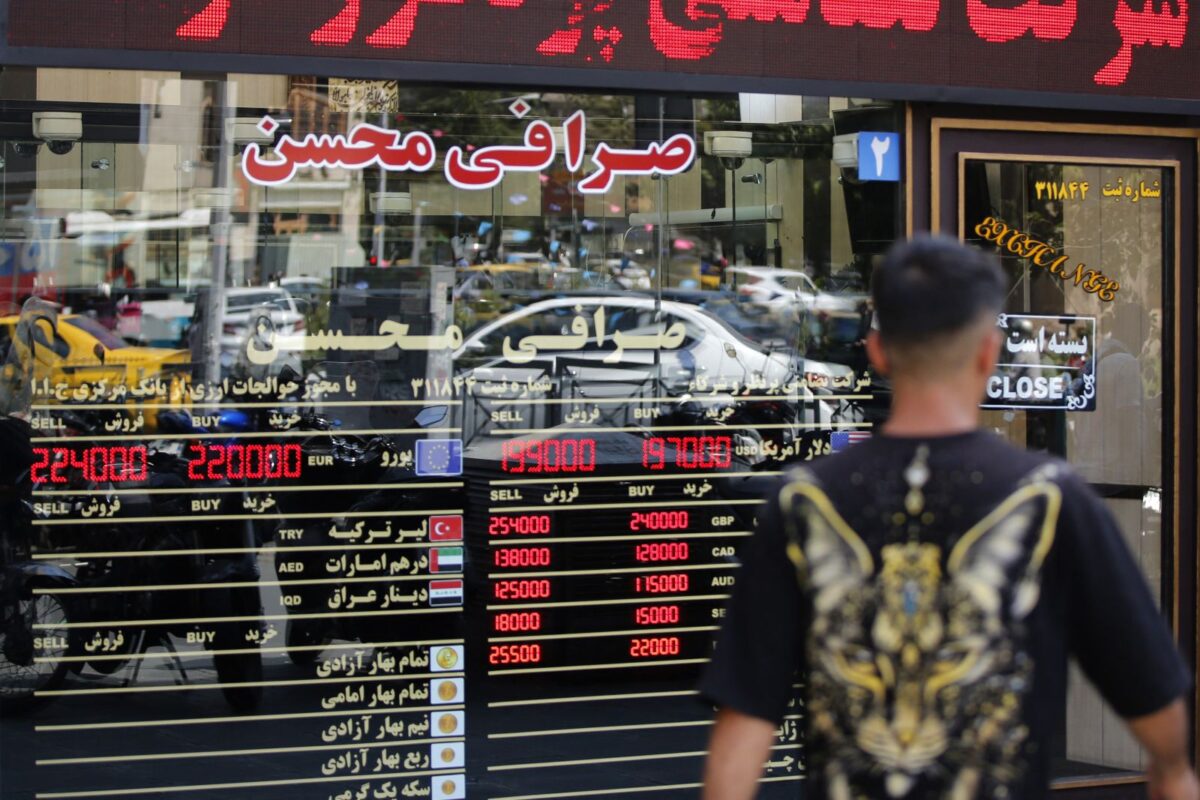
Photo by FATEMEH BAHRAMI / ANADOLU / ANADOLU VIA AFP. TEHRAN, IRAN - AUGUST 24: Currency exchange office is seen as daily life continues amid persistent tensions between Iran and the United States in the Iranian capital Tehran, on August 24, 2026.
There is a line supporters of the Iranian regime have been repeating these days with remarkable confidence, as though it were the argument that should end any discussion about life in the Islamic Republic:
“Gasoline in Iran is cheaper than water.”
“Gasoline in Iran is cheaper than water.”
They say it with pride.
Iranian analysts orbiting, to varying degrees, around the Islamic Revolutionary Guard Corps repeat it constantly. Their faces differ, their accents differ, their levels of aggression and ideological zeal differ, but the talking points are remarkably consistent: gasoline is cheaper than water, the Iranian people stand firmly behind the regime, Iran is too resilient to collapse, and 93 million Iranians are apparently ready to die defending the Islamic Republic — and a new Supreme Leader whose shape, character and future are not yet even clear.
The problem in Iran is not that gasoline has become cheaper than water.
The problem is the system that has made gasoline cheap while making life itself obscenely expensive — and then expects the Iranian citizen to be grateful for the privilege.
In Iran whose propagandists boast about cheap fuel, annual inflation reached around 66 percent in July 2026, according to official Iranian figures, while food prices rose by approximately 128 percent compared with the previous year.
And there is another small irony.
Iran, an oil-producing state whose rulers built part of their social contract around cheap energy, is also facing a daily gasoline deficit of roughly 15 million liters.
But never mind.
Gasoline is still cheap.
What exactly is an Iranian supposed to do with a cheap liter of gasoline when the price of his food is doubling?
Drink it?
Feed it to his children?
What exactly is an Iranian supposed to do with a cheap liter of gasoline when the price of his food is doubling?
Drink it?
Feed it to his children?
Or is he expected to thank the Islamic Revolution because filling the tank of his car costs less than filling the table in his home?
This is not really an economic argument. It is a window into the mentality of the regime and those who speak on its behalf.
In this worldview, the citizen is not an individual with rights, ambitions and a life of his own. He is human material in the service of a project larger than himself.
So when an analyst close to the Revolutionary Guards declares that 93 million Iranians are ready to die defending the regime, the first question should not even be where he found the figure.
The better question is:
When exactly was the referendum held?
How did he discover that an entire population wants to die for the Islamic Republic when that same population is not even permitted to freely choose how it wishes to live?
The contradiction becomes even more absurd when one considers what these same voices will say tomorrow.
The very people who today swear that 93 million Iranians are united, heroic and willing to sacrifice themselves for the Islamic Republic will not hesitate to accuse millions of them of treason if they take to the streets.
That is how “the people” function in the regime’s vocabulary.
The Iranian people are noble, authentic and resistant as long as they remain silent. Demand freedom, and they become Mossad agents. Protest poverty, and they become tools of Washington.
If a woman demands control over her own life, she becomes part of a Western cultural war.
In the Revolutionary Guards’ dictionary, the people are sacred only when they applaud.
In the Revolutionary Guards’ dictionary, the people are sacred only when they applaud.
The explanation for everything else has been ready since 1979.
The Great Satan is America. The Little Satan is Israel.
Sanctions explain poverty. Conspiracies explain protests. Mossad explains the opposition. Global arrogance explains economic failure.
Only the Islamic Republic explains nothing and is responsible for nothing.
As though four decades of corruption, mismanagement and military encroachment into the economy simply never happened.
As though the billions poured into the Revolutionary Guards, militias and Iran’s regional networks were imaginary money.
The system that somehow found the funds, weapons and fighters for adventures beyond Iran’s borders suddenly discovers, when the subject turns to the daily life of Iranians, that American sanctions have rendered it completely helpless.
The system that somehow found the funds, weapons and fighters for adventures beyond Iran’s borders suddenly discovers, when the subject turns to the daily life of Iranians, that American sanctions have rendered it completely helpless.
Sanctions matter, of course. They are severe, and their impact is real.
But sanctions are not the entire disease.
The disease is older and deeper.
It is the so-called Islamic Revolution itself — the project launched by Ayatollah Ruhollah Khomeini, which transformed from a promise of salvation into a machinery for exporting revolution and repression at the same time.
And it did not stop at subordinating Iran to its ideological project.
It turned much of the Arab world into a collection of arenas.
From Lebanon to Syria, Iraq and Yemen, militias were built, wars were financed and state institutions were penetrated — all under the grand banner of confronting America and Israel.
Here lies one of the great ironies of the Iranian project.
It declares Israel and the United States to be its enemies, yet it has spent an enormous share of its energy over the past decades dismantling Arab states.
It declares Israel and the United States to be its enemies, yet it has spent an enormous share of its energy over the past decades dismantling Arab states.
It raised the banner of Jerusalem while its influence expanded through Beirut, Damascus, Baghdad and Sanaa.
It spoke endlessly of liberating Palestine while constructing an empire built on a simple formula: weak states and strong militias.
And perhaps the funniest part is that the regime that curses America morning, noon and night now appears nostalgic for the doctrine of Barack Obama: an America that negotiates with Tehran, contains it, tolerates its regional expansion and treats it as an unpleasant but unavoidable partner in managing the Middle East.
The Revolutionary Guards do not actually want the hostility with Washington to disappear.
They want managed hostility.Enough hostility to justify themselves at home.Enough negotiation to protect their interests abroad.A permanent enemy for domestic consumption, accompanied by an arrangement that leaves the Arab world open for business.
This is why the regime’s language today feels familiar to anyone who has studied ideological systems in the later stages of their decline.
The Soviet Union did not collapse because of blue jeans and McDonald’s, obviously.
But jeans and McDonald’s symbolized something far more dangerous.
They represented the moment when the citizen of an empire promising to lead humanity discovered that the same empire could not provide him with the ordinary life he could see existing beyond its borders.
That is the Islamic Republic’s problem today.
It wants the Iranian citizen to take pride in missiles while worrying about his paycheck.
It wants him to celebrate regional influence while food prices soar.
It wants him to be prepared to die for Palestine, Lebanon, Yemen and Iraq while denying him the freedom to decide how he wishes to live in Tehran, Isfahan or Tabriz.
And then one of the Revolutionary Guards’ mouthpieces appears on television to inform him that gasoline is cheaper than water.
The phrase brings to mind, with all the irony history can offer, the line famously attributed to Marie Antoinette: if they have no bread, let them eat cake.
The Iranian version is darker.
Because the regime does not merely deny hunger.
It treats the admission of hunger as treason.
This, ultimately, is the mentality of the Revolutionary Guards.
They do not see a people. They see followers.
They do not see a country. They see an arena.
They do not see citizens. They see fuel for a project.
And when the bread runs out and the water dries up, the regime will not admit that it is the source of the problem.
It will discover another conspiracy.
Another Great Satan.
Another Little Satan.
And another analyst ready to explain to Iranians just how fortunate they are.
Because gasoline, after all, is cheaper than water.
And if they are thirsty, let them drink gasoline.
And if they are thirsty, let them drink gasoline.
This article originally appeared in Elaph.
Makram Rabah is the managing editor at Now Lebanon and an Assistant Professor at the American University of Beirut, Department of History. His book Conflict on Mount Lebanon: The Druze, the Maronites and Collective Memory (Edinburgh University Press) covers collective identities and the Lebanese Civil War. He tweets at @makramrabah