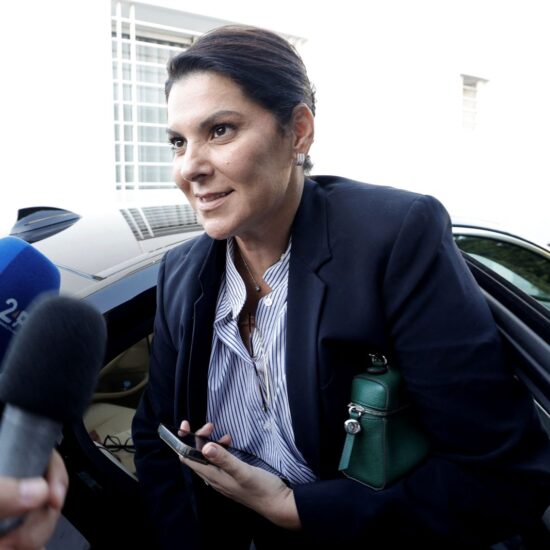
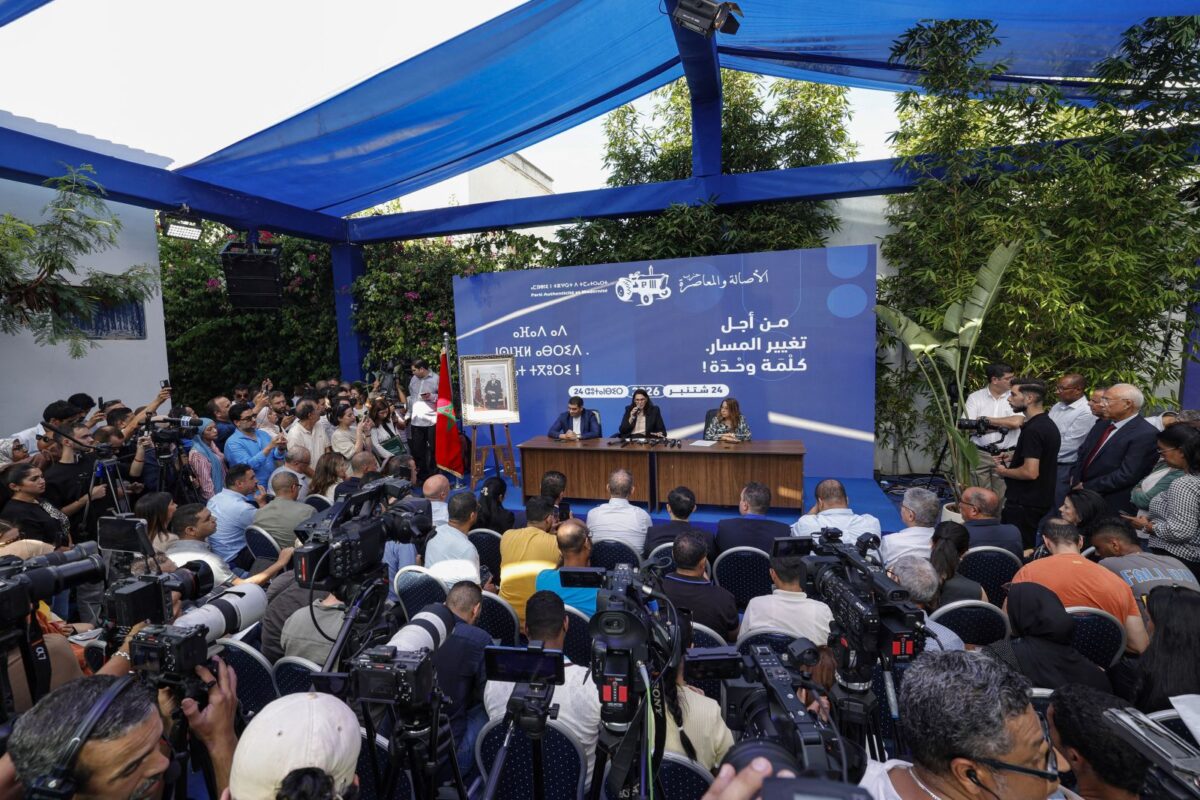
Photo by ABDEL MAJID BZIOUAT / AFP. Member of the collective leadership of Morocco's Authenticity and Modernity Party (PAM), Fatima Ezzahra El Mansouri, who is also Morocco's Minister of National Planning, Urban Planning, Housing and Urban Policy and Mayor of Marrakesh, speaks during a press conference at the PAM headquarters in Rabat following the announcement of the provisional results of Morocco's legislative elections on September 24, 2026.
Morocco’s parliamentary election is a reminder that political progress is built through institutions and repeated practice. The Authenticity and Modernity Party (PAM) won 97 of the 395 seats in the House of Representatives, emerging as the largest party without securing an outright majority. It must now work with others to form a government. The result opens a new period of negotiation, responsibility and public scrutiny.
Yet an assessment that stops at criticism overlooks a more consequential question: how does a country build a capable state over time? The answer lies in the steady work of holding elections, forming governments, assessing their performance and pursuing economic reform. Morocco is engaged in precisely that work.
Morocco has its critics, particularly among Western observers who tend to approach each election by looking first for shortcomings. Elections should, of course, be examined carefully. Yet an assessment that stops at criticism overlooks a more consequential question: how does a country build a capable state over time? The answer lies in the steady work of holding elections, forming governments, assessing their performance and pursuing economic reform. Morocco is engaged in precisely that work.
The results show a political system in motion. PAM has moved into first place. Its former senior coalition partner, the National Rally of Independents, lost seats. The Justice and Development Party (PJD), which suffered a severe defeat in 2021, returned with 54 seats and is expected to remain in opposition. These shifts give the next parliament a clear task. The government must turn its mandate into results, while the opposition has the opportunity to make its case to voters through parliamentary debate.
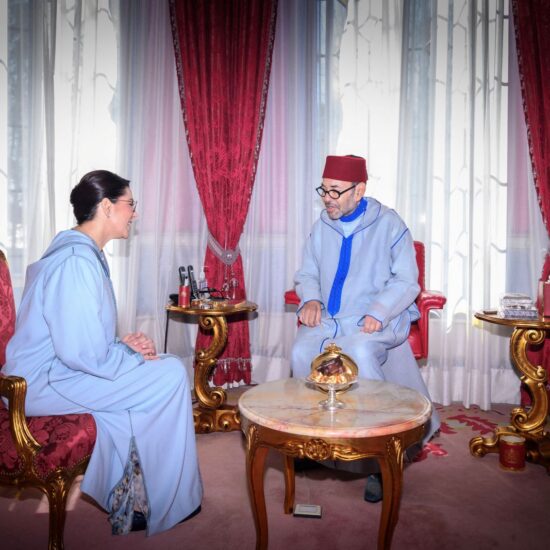
The election also fits within King Mohammed VI’s broader vision of a Morocco that combines institutional continuity with political and economic development. Under his leadership, the kingdom has invested in long-term projects while maintaining an electoral process through which parties compete and governments are formed. This is one of Morocco’s strengths: its ambitions for the future are pursued through institutions with deep roots in the country’s history.
Much of the outside commentary has focused on turnout, which stood at 38 percent of registered voters. That figure deserves attention, but it cannot tell the whole story of an election. Nor can it tell us how those who did not vote would have chosen. The PJD’s recovery is significant, but it finished well behind PAM. The more useful question now is how all parties can persuade more Moroccans, especially younger citizens, that participation helps shape decisions about jobs, education, housing and healthcare. Those are practical questions for the incoming government and parliament.
The vote in the Moroccan Sahara also merits attention. For Morocco, participation there at 77% is an expression of the region’s place in the country’s political life.
The vote in the Moroccan Sahara also merits attention. For Morocco, participation there at 77% is an expression of the region’s place in the country’s political life. Elections give residents a means to choose representatives who can bring local priorities into national discussions. In a region often described chiefly through diplomatic arguments, the act of voting draws attention to people’s everyday concerns: employment, infrastructure, services and the prospects available to their children.
The next government will take office at an especially important moment for Morocco’s development. The country is preparing to cohost the 2030 FIFA World Cup with Spain and Portugal, a project that has helped focus attention and investment on infrastructure. Its value should be measured well beyond the tournament itself. Better transport links, stronger urban services and lasting economic activity could serve Moroccans for decades. The World Cup offers an opportunity to connect national ambition with improvements people can use in their daily lives.
The possibility that Fatima-Zahra Mansouri could be chosen as prime minister adds another dimension to this political moment. She would be the first woman to hold the post. Whether or not she is appointed, her consideration for the role reflects the growing visibility of women in Morocco’s public leadership. It is one of several reasons to watch the formation of the next government with interest.
As someone who has followed Morocco closely, I find its progress particularly striking given the pressures of its regional environment. Its ambitions have not always been welcomed by those around it. Even so, the kingdom has continued to invest in its institutions, its economy and its place in the wider world. The election belongs to that longer trajectory.
No single vote can complete the work of state building. What this one has done is set the next stage in motion. It has produced a new parliamentary balance, a governing party that must build a coalition, and an opposition able to present an alternative.
No single vote can complete the work of state building. What this one has done is set the next stage in motion. It has produced a new parliamentary balance, a governing party that must build a coalition, and an opposition able to present an alternative. The task ahead is to translate political continuity and national ambition into opportunity for more Moroccans. Seen in that light, the parliamentary election is a step in the right direction.
Makram Rabah is the managing editor at Now Lebanon and an Assistant Professor at the American University of Beirut, Department of History. His book Conflict on Mount Lebanon: The Druze, the Maronites and Collective Memory (Edinburgh University Press) covers collective identities and the Lebanese Civil War. He tweets at @makramrabah