AI GENERATED IMAGE
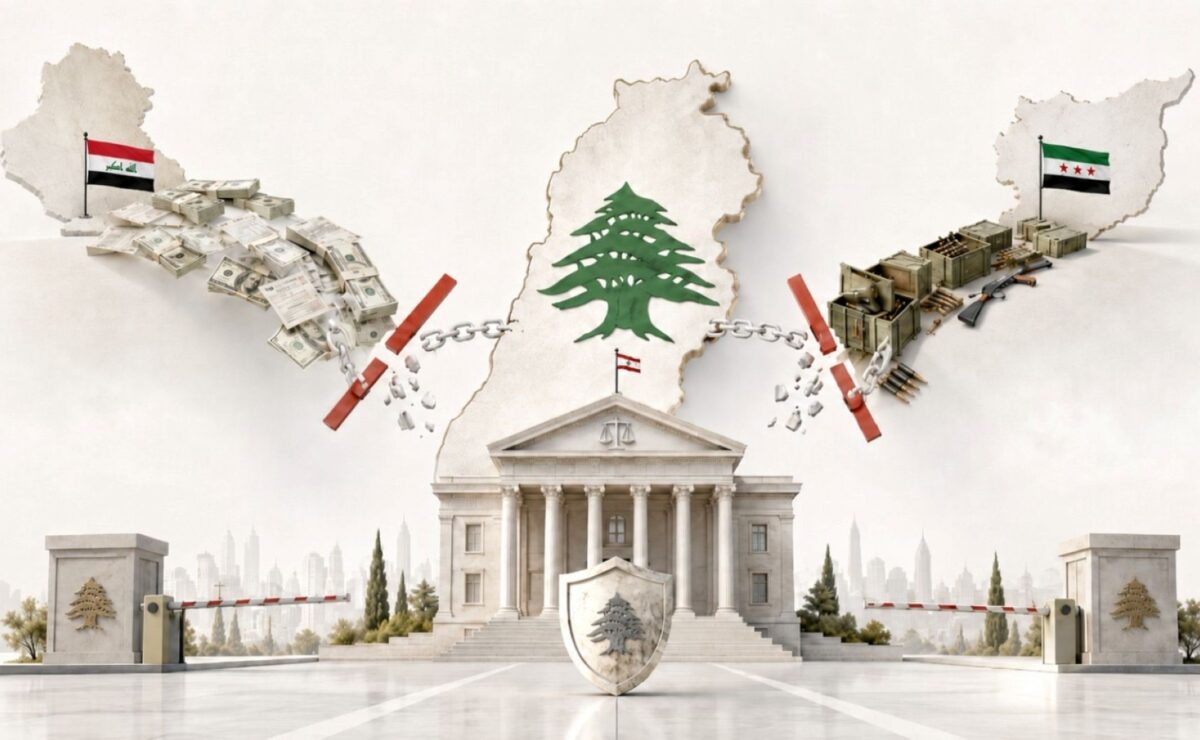
The tightening pressure on Hezbollah’s financial networks in Iraq and its shrinking access to weapons through Syria represent a potentially decisive change in the regional balance. For years, the organization survived not merely because of Iranian money, but because it operated across a permissive regional infrastructure: Iraqi markets and companies generated revenue, religious travel provided cover for the movement of funds, Syrian territory enabled the passage of weapons, and Lebanon offered the political protection necessary to receive both.
Disrupting these routes is therefore essential.
Iraq matters enormously to Hezbollah. Its economy is larger than Lebanon’s, its political system has long been penetrated by Iranian-backed factions, and its commercial networks have provided opportunities for fundraising, money laundering, procurement, and the transfer of funds. Figures associated with Hezbollah have reportedly operated inside Iraq not simply as political representatives but as enforcers, intermediaries, and financial coordinators connecting Lebanese Hezbollah to Iran’s broader militia system. The interview also highlights the role of religious travel between Lebanon and Iraq as a potential cover for moving money through otherwise legitimate channels.
Syria, meanwhile, has historically served as Hezbollah’s military highway. Weapons arriving from Iran could pass through Syrian territory before reaching Lebanon. Any serious Syrian effort to close these routes would constrain Hezbollah’s ability to rebuild its arsenal, replace destroyed weapons, and restore the military infrastructure that allowed it to operate as a state within the state.
Taken together, Iraqi financial pressure and Syrian border enforcement could deprive Hezbollah of the two resources it needs most: money and arms.
But Lebanese officials should not confuse regional pressure with a Lebanese strategy.
Whatever the governments of Iraq and Syria do, their actions cannot replace the responsibility of the Lebanese state. Iraq can seize funds, close companies, and arrest financial operatives. Syria can prevent weapons from crossing its territory. The United States can impose sanctions and expose individuals, banks, companies, and charities involved in financing armed groups. Yet none of this will be sufficient if Lebanon remains the final safe haven for the same networks.
The real question is whether the Lebanese state is prepared to behave like a state.
That means examining every smuggling route connecting Lebanon to Syria and, indirectly, to Iraq. It means investigating companies, money-transfer businesses, charities, travel agencies, commercial importers, and religious-tourism networks that may be used to move cash or conceal financial activity. It means strengthening customs inspections at airports, ports, and land crossings and ending the fiction that smuggling is a peripheral criminal problem rather than a fundamental threat to national sovereignty.
Most importantly, it means following through on international sanctions against Hezbollah and other Iranian-backed organizations.
Lebanon cannot continue pretending that sanctions imposed by the United States or other international actors are someone else’s concern. When individuals or institutions are designated for financing armed organizations, Lebanese authorities must investigate their local assets, business relationships, banking activity, and political protection. Sanctions should not merely prevent designated figures from accessing foreign banks while allowing them to continue operating freely inside Lebanon.
The Lebanese government should establish a permanent interagency unit bringing together the judiciary, customs authorities, financial investigators, the Internal Security Forces, State Security, and military intelligence. Its mandate should be clear: identify, investigate, freeze, and prosecute the networks that finance or supply armed groups operating outside state authority.
The Lebanese government should establish a permanent interagency unit bringing together the judiciary, customs authorities, financial investigators, the Internal Security Forces, State Security, and military intelligence. Its mandate should be clear: identify, investigate, freeze, and prosecute the networks that finance or supply armed groups operating outside state authority.
This is not a demand that Lebanon outsource its sovereignty to Washington. On the contrary, it is a demand that Lebanon finally exercise sovereignty itself.
The deeper obstacle is not technical. It is political.
Hezbollah’s financial and military networks have survived because they are embedded in what can only be described as a mobster culture. Armed power protects political corruption; corrupt politicians, in return, provide institutional cover for armed power. Smuggling is tolerated because influential officials benefit from it. Financial networks remain untouched because they are connected to political parties, security figures, or commercial interests. Laws exist, but enforcement stops where militia influence begins.
This protection racket has hollowed out the republic.
Hezbollah portrays itself as an organization standing outside Lebanon’s corrupt political order, yet it has become one of that order’s principal guarantors. It provides coercive protection to politicians who obstruct reform, while those politicians defend Hezbollah’s weapons and shield its financial networks. One side supplies the guns; the other supplies the signatures, appointments, licenses, and legal immunity.
This is why cutting Hezbollah’s Iraqi and Syrian lifelines, while vital, will not by itself restore Lebanon.
This is why cutting Hezbollah’s Iraqi and Syrian lifelines, while vital, will not by itself restore Lebanon.
The organization may lose money abroad and still extort resources at home. It may lose access to Syrian weapons routes and still preserve hidden arsenals inside Lebanon. It may face American sanctions and still benefit from Lebanese officials who refuse to enforce them.
Regional conditions have created an opportunity. Iraq appears increasingly willing to confront militia financing. Syria may no longer provide the same unrestricted corridor. International pressure is exposing the structures that kept Iran’s regional network alive.
Lebanon must now do its part.
The Lebanese state must choose whether it intends to dismantle the criminal economy surrounding Hezbollah or continue serving as its administrative cover. There is no neutral position. Failure to investigate smuggling, enforce sanctions, and prosecute financing networks is not caution. It is complicity.
The financial lifeline from Iraq must be cut. The weapons corridor through Syria must be closed. But the final battle must be fought in Beirut, inside Lebanon’s ministries, courts, banks, ports, borders, and security institutions.
The financial lifeline from Iraq must be cut. The weapons corridor through Syria must be closed. But the final battle must be fought in Beirut, inside Lebanon’s ministries, courts, banks, ports, borders, and security institutions.
Only the Lebanese state can end the mobster culture that allowed Hezbollah to become richer than the republic, stronger than its institutions, and more feared than its laws.