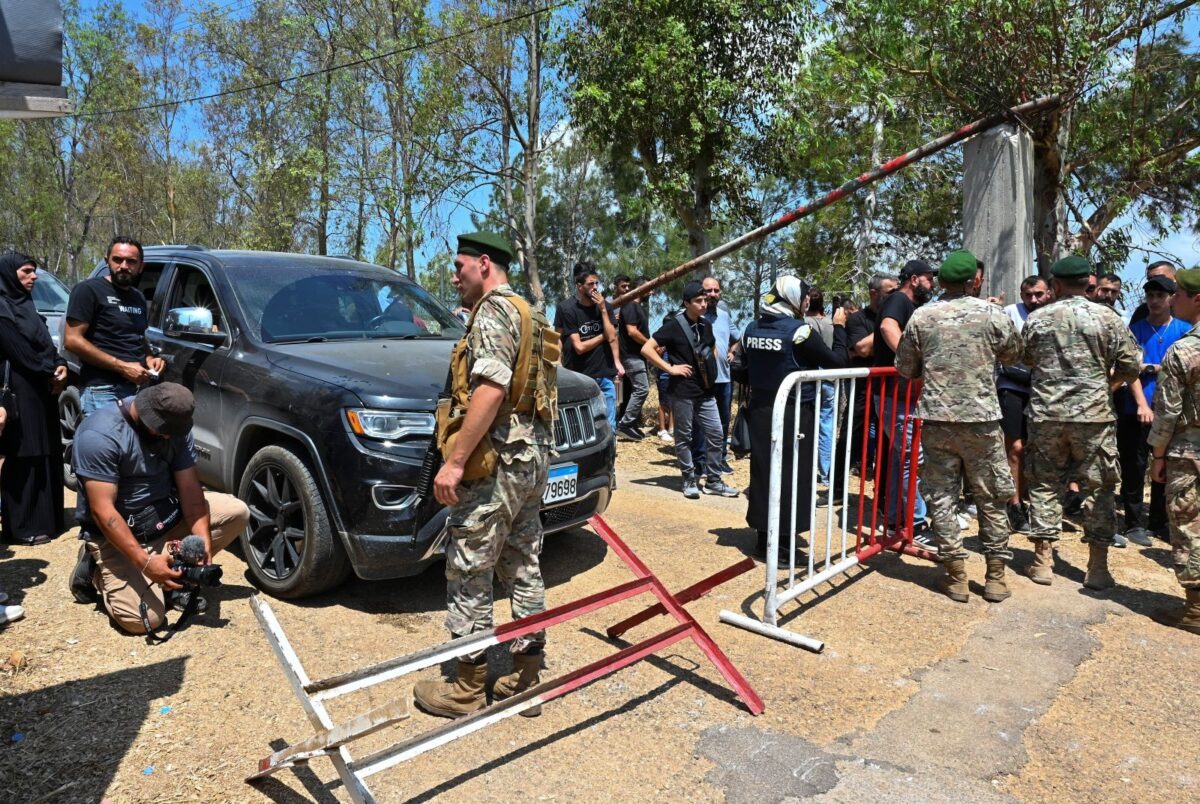
Lebanon, Zawtar. Photo by FADEL ITANI / NURPHOTO / NURPHOTO VIA AFP
Lebanese army soldiers take security measures in the town of West Zawtar, Lebanon, on July 24, 2026, following the withdrawal of Israeli troops as part of a pilot zone implementation.
The launch of pilot zone operations in southern Lebanon has become the country’s most significant political and security development this week. Under a US-brokered framework between Lebanon and Israel, the Lebanese Armed Forces have begun deploying in designated villages following phased Israeli withdrawals, beginning with Zawtar al-Gharbiyeh, alongside Froun and Srifa. The initiative is designed to create areas under the exclusive authority of the Lebanese state, free of armed groups, while paving the way for further Israeli withdrawals and the return of displaced residents.
The pilot zones represent a test of whether state institutions can gradually restore authority in southern Lebanon after decades in which Hezbollah maintained a dominant security role. Success could strengthen international confidence in Lebanon’s institutions and encourage reconstruction efforts. Failure, however, risks reinforcing doubts about the state’s ability to implement security commitments or extend its sovereignty across all Lebanese territory.
The coming weeks will therefore determine whether the pilot zones become a model for broader implementation or remain a limited experiment.
In Lebanon
Pilot zone implementation officially began in southern Lebanon, with Lebanese Army units deploying in Zawtar al-Gharbiyeh after Israeli forces withdrew from the area. Army engineers have started clearing unexploded ordnance while authorities continue coordinating with the Military Coordination Group overseeing the agreement.
President Joseph Aoun reiterated that the opportunity has come to end Lebanon’s repeated cycles of war by strengthening state institutions and ensuring that security decisions rest with the Lebanese state.
Prime Minister Nawaf Salam visited Baghdad, where discussions focused on reviving the Iraq-Lebanon oil pipeline project and expanding economic cooperation, energy partnerships and trade between the two countries.
Diplomatic activity intensified as Lebanese officials continued consultations with international partners regarding implementation of the security framework, Israeli withdrawals, reconstruction and the return of displaced residents.
The Maronite Church witnessed a historic moment with the beatification of Patriarch Elias Peter Hoayek, founder of Greater Lebanon, in a ceremony attended by senior Lebanese political and religious figures.
Southern Lebanon remains in a state of uncertainty as residents weigh hopes of returning home against continued security concerns and extensive destruction across border villages.
Lebanese military officials warned that any attempts to obstruct implementation of the framework agreement could jeopardize efforts to stabilize southern Lebanon and restore civilian life.
Increasing pressure on Hezbollah as tighter state control over border crossings and ports reduces avenues for financing and smuggling, while the group continues facing financial difficulties that have complicated compensation payments to supporters affected by the war.
In the Region
Syria’s President Ahmad al-Sharaa said Damascus is seeking a security agreement with Israel aimed at reducing tensions while reaffirming Syria’s sovereignty.
Israeli Prime Minister Benjamin Netanyahu is expected to meet US President Donald Trump this week as discussions continue over regional security, Lebanon and broader Middle East diplomacy.
Iran claimed it carried out attacks against US military bases in Bahrain, Jordan and Kuwait, underscoring continued regional tensions despite ongoing diplomatic efforts.
Syria reported fresh Israeli shelling and military incursions in the country’s south despite ongoing diplomatic contacts.
UN Secretary-General António Guterres visited Syria and called for sustained international support to help stabilize the country and support reconstruction after years of conflict.
What we’re reading
Pilot zones put Lebanon’s sovereignty to the test in the south
This piece by Rodayna Raydan is an examination of how the pilot zone initiative could reshape security in southern Lebanon while testing whether the Lebanese state can successfully reclaim authority from Hezbollah.
A new way to see Lebanon’s economic future? Ask the young
The article argues that Lebanon’s long-term economic recovery depends on empowering young people, encouraging innovation and creating opportunities that reduce emigration.
Where should we look for the religious identity of Lebanon’s old ruling houses?
A historical exploration by Charles Al Hayek of Lebanon’s prominent political families and how religion, identity and power evolved over centuries of political change.
Lebanon leaves Iran’s axis and enters the peace club under strict conditions
An analysis of Lebanon’s evolving regional position by Elissa El Hachem following recent diplomatic developments, examining both the opportunities and the political constraints accompanying a possible strategic shift.
The long way home
A human-centred feature by Eli Khoury documenting the difficult journey of displaced Lebanese families seeking to rebuild their lives and return to their communities after months of conflict.