Washington, United States. Photo by SAUL LOEB / AFP
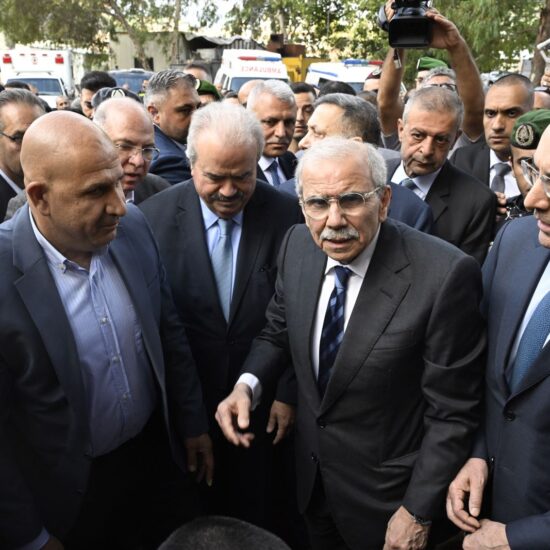
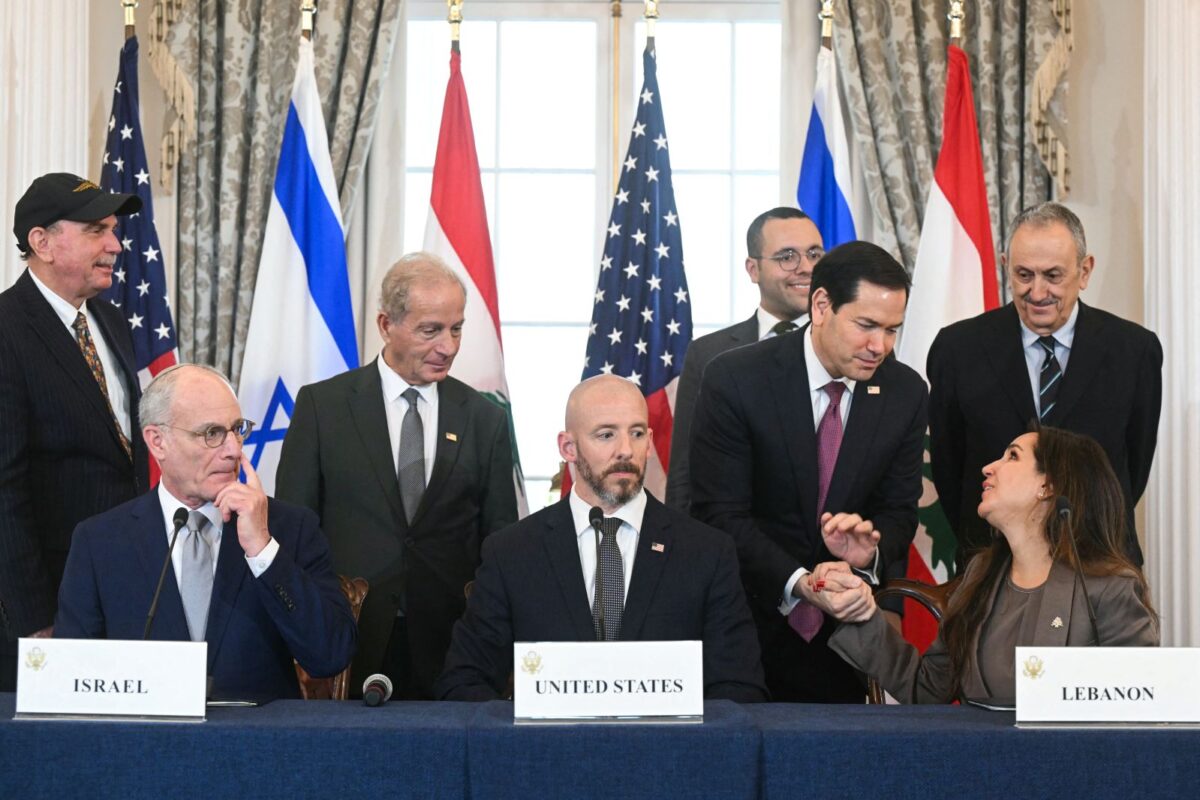
US Secretary of State Marco Rubio shakes hands with Lebanese Ambassador to the US Nada Hamadeh (R, front) as Israeli Ambassador to the US Yechiel Leiter (L, front) and State Department Chief of Staff Daniel Holler (C, front) look on during a signing ceremony at the US Department of State in Washington, DC, on June 26, 2026.
Lebanon, Israel and the United States on Friday signed a trilateral framework agreement aimed at paving the way for a peace deal between the two long-time Middle East adversaries.
On Friday, Lebanon and Israel signed a United States-brokered framework agreement in Washington, marking the first formal agreement between the two countries since the 1983 accord. Described by both sides as an initial framework rather than a final peace treaty, the agreement sets out a phased roadmap aimed at ending the state of war and restoring stability along the border.
Under the agreement, Lebanon commits to the verified disarmament of all non-state armed groups, including Hezbollah, and to extending the authority of the Lebanese Armed Forces across all Lebanese territory. In return, Israel would gradually redeploy its forces from areas it currently controls in southern Lebanon, beginning with two pilot zones where implementation will first be tested before expanding through a future security annex. The framework also affirms that only the Lebanese state has the authority to use force on its territory, while Israel states that it has no territorial claims in Lebanon.
The agreement was signed by Lebanese Ambassador Nada Hamadeh Moawad and Israeli Ambassador Yechiel Leiter alongside US Secretary of State Marco Rubio at the US State Department. Rubio described the deal as “the first step in what will undoubtedly be a difficult but necessary journey,” announcing additional US support for Lebanon, including humanitarian assistance and funding to strengthen the Lebanese Armed Forces.
Lebanese President Joseph Aoun welcomed the agreement as a first step toward restoring full Lebanese sovereignty and enabling displaced residents to return to their homes, while Israeli Prime Minister Benjamin Netanyahu said Israeli forces would continue to hold areas in southern Lebanon until Hezbollah is disarmed in accordance with the framework.
The agreement immediately drew strong opposition from Hezbollah. Senior party officials rejected the framework, insisting the group would not surrender its weapons and warning that any attempt to enforce disarmament could destabilize the country. Hezbollah MP Hassan Fadlallah said the Lebanese authorities would be unable to implement the agreement without triggering internal conflict, while other officials described the deal as legally and politically unacceptable.
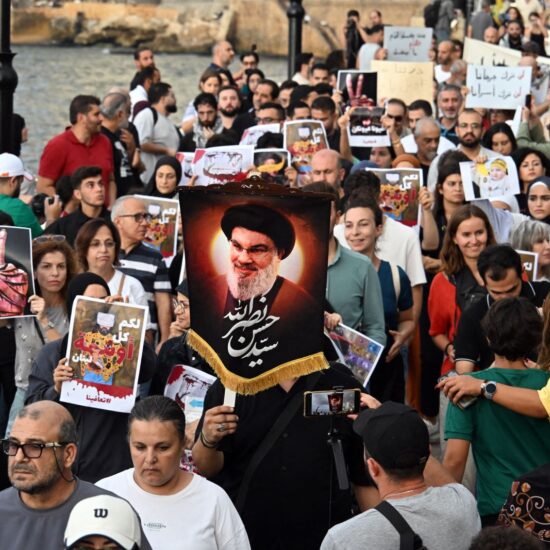
Hours after the signing, Hezbollah supporters took to the streets of Beirut in protest, waving Hezbollah flags and denouncing the agreement. The demonstrations reflected the group’s pledge to mobilize public opposition against any effort to implement the framework and highlighted the political challenges facing the Lebanese government as it seeks to restore state authority under the terms of the agreement.
In Lebanon
Lebanon and Israel signed a US-brokered framework agreement in Washington, marking the first formal agreement between the two countries since 1983: The framework links a phased Israeli withdrawal from southern Lebanon to the verified disarmament of Hezbollah and the deployment of the Lebanese Armed Forces across the country’s territory. US Secretary of State Marco Rubio described the deal as “the beginning of the beginning,” while Lebanese President Joseph Aoun called it the first step toward restoring Lebanon’s sovereignty and enabling displaced residents to return home. Israeli Prime Minister Benjamin Netanyahu hailed the agreement as a “historic achievement” that deals a blow to Iran and Hezbollah, while Egypt welcomed the framework and reaffirmed its support for Lebanon’s efforts to extend state authority over all its territory.
Hezbollah rejected the framework agreement, insisting that it would not surrender its weapons and warning that attempts to implement the deal could destabilize Lebanon: MP Hassan Fadlallah argued that the agreement could only be enforced through “civil war” with US backing, while Secretary-General Naim Qassem demanded an unconditional Israeli withdrawal from Lebanese territory. Hezbollah officials also claimed the agreement undermines the recent US-Iran understanding reached earlier this month.
Hezbollah supporters staged protests across Beirut hours after the agreement was signed: Convoys of Hezbollah supporters riding motorcycles drove through central Beirut, the airport road and areas surrounding Parliament while chanting slogans rejecting the framework. Protesters briefly blocked roads by burning tires, prompting the Lebanese Army to deploy temporary checkpoints and reopen access routes, including the road leading to Beirut’s airport.
The Lebanese Cabinet cancelled this year’s official baccalaureate examinations because of the country’s deteriorating security situation after months of war: Students registered for the exams will instead receive certificates based on their academic performance during the school year, provided they achieved the required minimum average. The decision ended weeks of uncertainty and triggered celebrations by students who had staged demonstrations calling for the exams to be cancelled.
The Cabinet suspended the implementation of new customs duties introduced under Decree No. 3214, citing Lebanon’s difficult economic conditions and the impact of the war: Ministers said the customs schedule will be reviewed before any revised rates are introduced.
Lebanon’s General Security extended exceptional departure measures for Syrians and Palestinian refugees from Syria residing illegally in Lebanon: The facilitation allows eligible individuals to leave through land border crossings without paying fines or facing entry bans until July 30, 2026, after which authorities said immigration laws will be strictly enforced.
General Security announced that Lebanon’s non-biometric 2003 passports will be phased out: Holders of the passports, identifiable by serial numbers beginning with “RL”, have been urged to replace them with biometric passports. Beginning October 1, 2026, the old passports will no longer be accepted for departures from Lebanon.
In the Region
Israeli forces expanded their military presence in southern Syria, carrying out operations against armed groups while establishing new positions in parts of Quneitra and western Daraa: Israeli troops reportedly set up additional military posts near Tal al-Maghar and continued firing toward surrounding areas as part of what Israeli officials describe as efforts to secure a buffer zone, reinforcing what has become known as the “Yellow Line.” Saudi Arabia condemned the Israeli operations, calling them a violation of Syrian sovereignty and international law, and urged Israel to respect the 1974 Disengagement Agreement.
Iran launched new attacks targeting US military facilities in Kuwait and Bahrain, describing the strikes as retaliation for recent American attacks on Iranian territory: Iran’s Revolutionary Guard claimed to have targeted military infrastructure linked to the US presence in both Gulf states, prompting widespread Arab condemnation. Lebanese President Joseph Aoun denounced the attacks as a violation of the sovereignty of Bahrain and Kuwait and warned that the escalation risks undermining regional efforts to contain the conflict.
The United States pledged additional humanitarian and military assistance to support implementation of the Lebanon-Israel framework agreement: Washington announced new humanitarian funding alongside further assistance aimed at strengthening the Lebanese Armed Forces and supporting the extension of state authority across Lebanese territory as implementation of the agreement moves forward.
What we’re reading:
“Lebanon and Israel: A framework for peach, sovereignty and security”: A detailed analysis of the US-brokered framework agreement between Lebanon and Israel, examining its key provisions, implementation mechanism, and the political, security and diplomatic challenges that lie ahead. The piece explores how the agreement seeks to restore Lebanese sovereignty while addressing Hezbollah’s future role and the prospects for lasting peace.
“Thank You, Iran”? Airport Road Billboards Spark Debate Over Sovereignty and Lebanon’s Future: In this analysis piece, Rodayna Raydan, examines how billboards thanking Iran along Beirut’s airport road reignited debate over Lebanese sovereignty, foreign influence and the state’s authority over public space. It explores the symbolism behind the signs and what they reveal about Lebanon’s competing political narratives in the post-war period.
The Exams are Cancelled. So Is the Illusion: An opinion piece by NOW’s Managing Editor, Makram Rabah reflecting on the government’s decision to cancel this year’s official baccalaureate examinations. It argues that the move highlights the deeper institutional and educational crises facing Lebanon, questioning whether emergency measures have become a substitute for meaningful reform.
In Search of the Lebanese Ashura: A Heritage at the Edge of Memory? A cultural feature by Charles Al-Hayek exploring the evolution of Ashura in Lebanon, tracing its historical, religious and social significance beyond contemporary politics. The article reflects on how traditions have changed over time and what remains of Lebanon’s diverse Ashura heritage today.
The Empty Chairs: Who Commands Lebanon’s Army? An analysis piece by Elissa El Hachem of the vacancies within the Lebanese Armed Forces’ senior command structure and the implications for military leadership at a pivotal moment for the country. The piece examines how institutional uncertainty could affect the army’s ability to carry out its expanding security responsibilities.